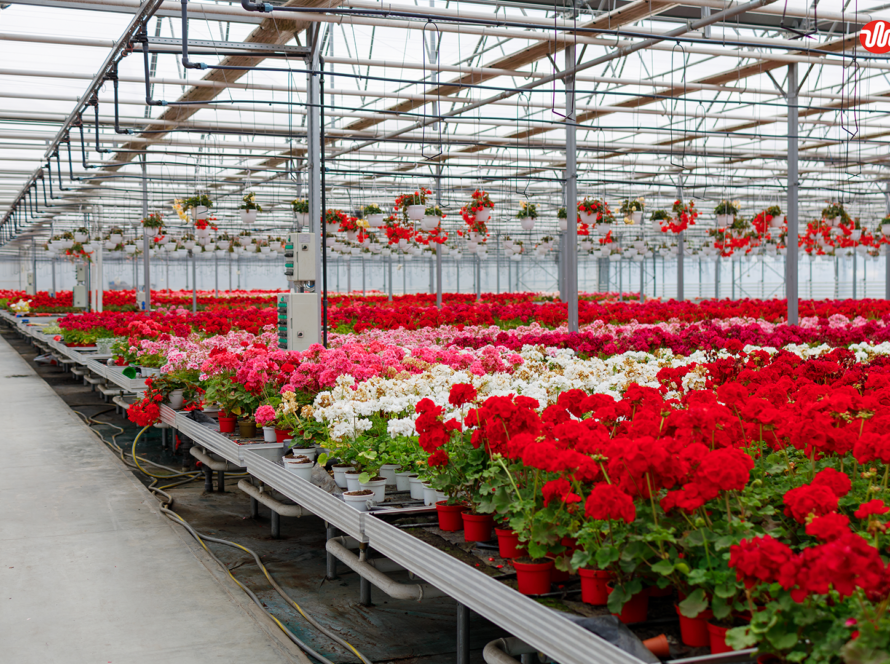
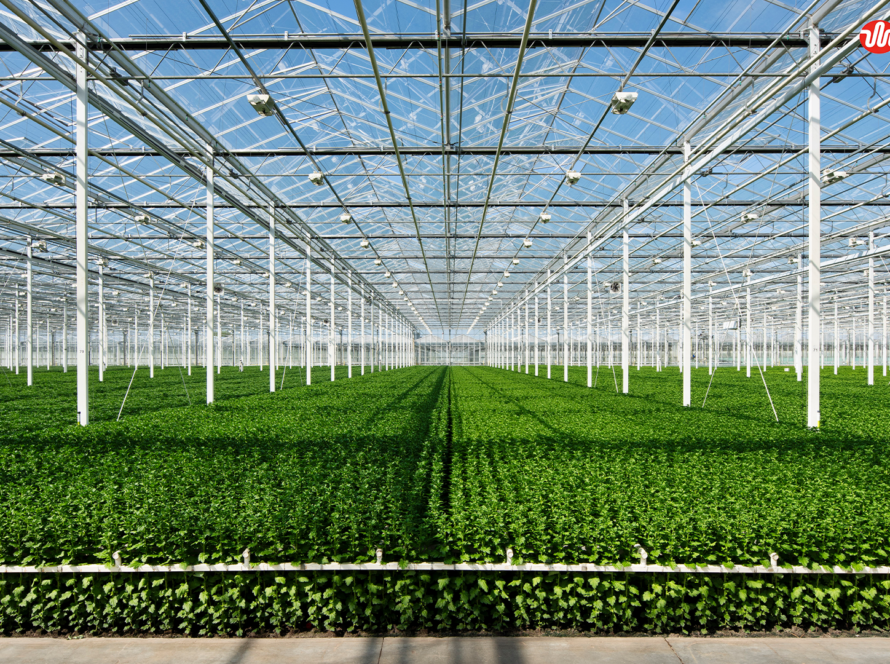
A smart greenhouse is a modern greenhouse management system that combines sensors, automation, IoT devices, remote monitoring software and, where appropriate, artificial intelligence. The goal is not simply to automate equipment, but to make climate, irrigation, energy and production data measurable so that greenhouse operations can become more controlled and data-driven.
What Is a Smart Greenhouse?
A smart greenhouse differs from a conventional greenhouse by continuously collecting information from field sensors and using automation systems to evaluate and respond to changing production conditions.
Temperature, humidity, irrigation, energy consumption, root-zone temperature and equipment operating status can all be monitored through digital systems.
Agroteknik's greenhouse automation approach combines sensors, controllers, IoT gateways and cloud-based monitoring within a connected technical infrastructure.
How Does a Smart Greenhouse Work?
In a smart greenhouse, field data moves from sensors through control systems and, where required, into cloud storage and analytics platforms.
Measure physical and environmental conditions inside the greenhouse.
Controls equipment such as fans, valves, pumps and heating systems.
Transfers greenhouse data to centralized systems and stores historical records.
Historical data can support trends, forecasts and decision-support models.
What Systems Are Used in a Smart Greenhouse?
Climate Sensors
Measure temperature, humidity, light and other environmental variables.
Greenhouse Automation
Manages heating, ventilation, irrigation and other field equipment according to defined control strategies.
IoT Gateways
Provide communication between field devices using different protocols and centralized software.
Cloud Software
Stores greenhouse data centrally and makes it accessible remotely.
Alarm Systems
Help identify critical temperatures, equipment failures or communication problems more quickly.
Data Analytics
Allows historical climate, energy, irrigation and production performance to be compared.
What Is the Difference Between a Smart Greenhouse and a Traditional Greenhouse?
The main difference is the level of automation, connectivity and data collection used to manage greenhouse operations.
In a traditional greenhouse, many processes may depend heavily on manual operator decisions. In a smart greenhouse, sensors continuously monitor conditions, automation systems apply predefined rules and operational data can be stored centrally.
The goal is not to eliminate greenhouse operators. Smart technology is used to help operators understand field conditions more quickly and automate repetitive control processes.
What Can Smart Greenhouse Automation Control?
Depending on the project, different groups of greenhouse equipment can be connected to the automation system.
Heating
Heating systems can be controlled according to greenhouse or root-zone temperature.
Ventilation
Fans, motors and ventilation equipment can operate according to greenhouse climate conditions.
Irrigation
Pumps, valves and irrigation zones can be managed according to schedules or sensor data.
Energy and Equipment
Energy consumption and equipment operating status can be continuously monitored.
How Is IoT Used in Smart Greenhouses?
IoT allows greenhouse sensors, controllers and other field devices to communicate with broader digital systems.
Data collected from field equipment can be transferred through an IoT gateway to centralized servers or cloud platforms.
This makes it possible to monitor multiple greenhouse blocks or facilities in different locations through the same management interface.
Agroteknik's greenhouse IoT data storage and cloud infrastructure approach provides a foundation for storing operational data over longer periods and using it in analytical applications.
A greenhouse does not become “smart” simply because sensors are connected to the internet. Sensors, automation, control systems, data storage and decision-support technologies need to work together.
How Does Remote Monitoring Work in a Smart Greenhouse?
In systems with cloud infrastructure, greenhouse data can be transferred over the internet to a centralized software platform.
Authorized users can access temperature, humidity, equipment status, alarms and other operational information through computers, tablets or mobile devices.
Agroteknik's cloud-based greenhouse management platform can support centralized monitoring of data generated by different greenhouse systems.
How Is Artificial Intelligence Used in Smart Greenhouses?
Artificial intelligence is not required for basic greenhouse automation. However, once sufficient and reliable historical data has been collected, AI and machine learning can support more advanced analytical applications.
Possible applications include:
Production Forecasting
Historical climate and production data can be used to develop models for estimating future production performance.
Anomaly Detection
Unusual changes in sensor measurements or equipment behavior can be analyzed automatically.
Energy Analytics
Relationships between energy consumption, outdoor weather and greenhouse temperature can be evaluated.
Decision Support
Multiple variables can be analyzed together to provide additional information for greenhouse managers.
Agroteknik's AI and machine learning solutions can support the use of greenhouse data in more advanced analytical and decision-support systems.
What Are the Benefits of Smart Greenhouse Systems?
More Measurable Production
Greenhouse conditions and equipment behavior can be compared with historical operating records.
Faster Alarm Management
Critical temperature changes, sensor problems and equipment issues can be identified more quickly.
Remote Greenhouse Management
Multiple greenhouse blocks or facilities can be monitored through a centralized digital platform.
Data-Driven Improvement
Relationships between energy, irrigation, climate and production performance can be analyzed.
Can an Existing Greenhouse Be Converted into a Smart Greenhouse?
In many cases, existing greenhouse facilities can be upgraded with sensors, IoT gateways, remote monitoring and automation systems.
Before integration, the existing control panels, electrical infrastructure, field equipment and communication protocols should be evaluated.
Some equipment may connect directly to the new system, while other devices may require additional controllers, gateways or field modules.
Smart Systems in Turnkey Greenhouse Projects
In new greenhouse investments, smart-system infrastructure is usually easier to integrate when it is planned during the initial engineering stage rather than added later.
Within Agroteknik's turnkey greenhouse projects, greenhouse structure, heating, climate control, irrigation, automation, sensors, IoT and data infrastructure can be evaluated together.
This allows the greenhouse to begin collecting structured operational data from the first day of operation and creates a stronger foundation for future analytical applications.
What Should You Consider When Building a Smart Greenhouse?
Define the Data You Actually Need
Focus on variables that support real operational decisions instead of collecting unnecessary data.
Maintain Local Control
Critical greenhouse equipment should continue operating locally if internet or cloud connectivity is interrupted.
Plan Communication Infrastructure Early
Communication between sensors, controllers, gateways and centralized software should be designed from the beginning.
Plan for Future Integration
Choose infrastructure that can support additional sensors, greenhouse blocks, analytics and AI systems later.
Plan Your Smart Greenhouse Infrastructure
We can evaluate automation, sensors, IoT gateways, cloud software and data infrastructure requirements for new or existing greenhouse projects.