
Protected Plant Growing with Mini Greenhouse Cones
Protection along planting rows and more balanced growing conditions for young plants.
Protected Growing Areas with ConeCover Mini Greenhouse Cones
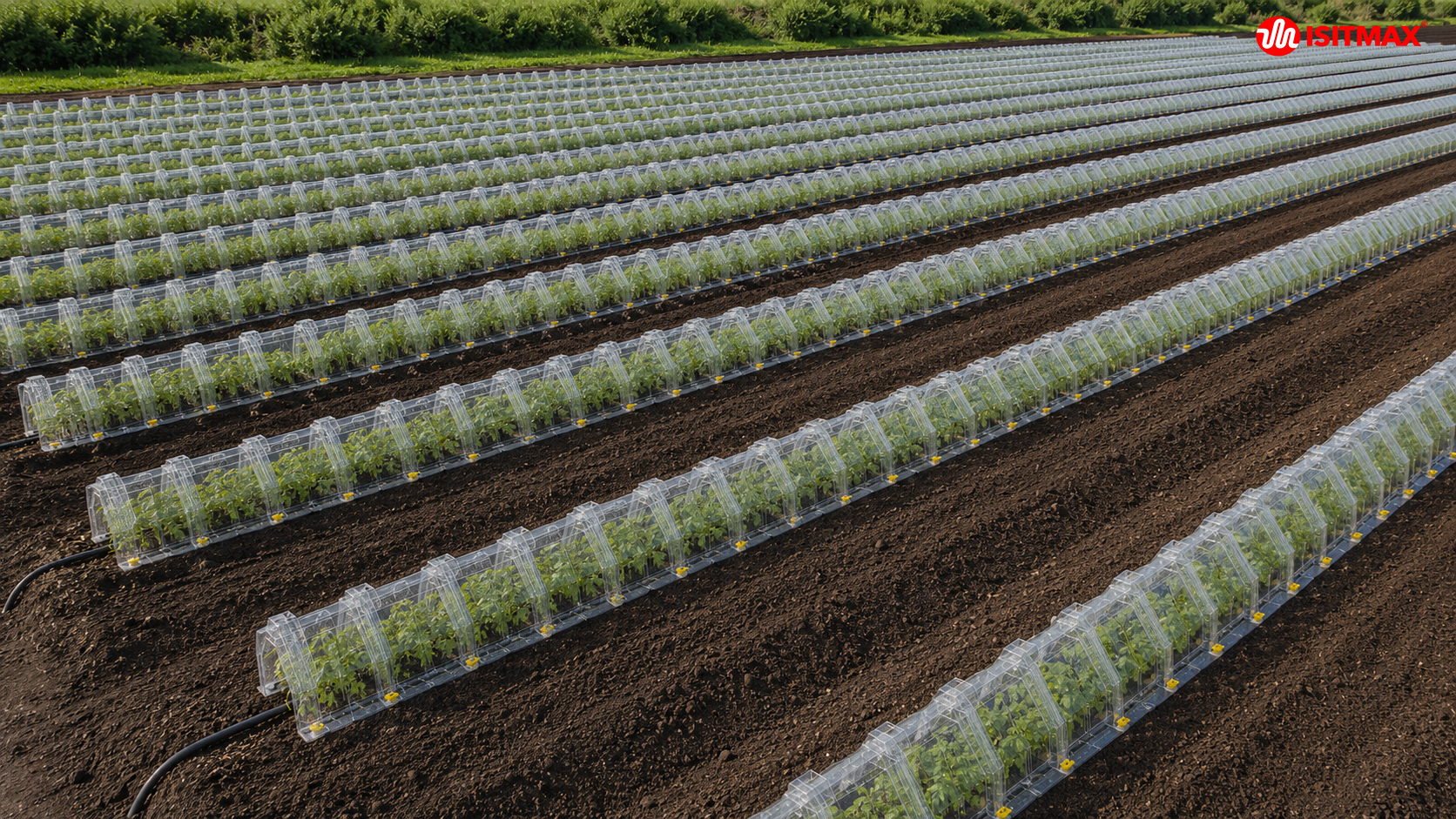
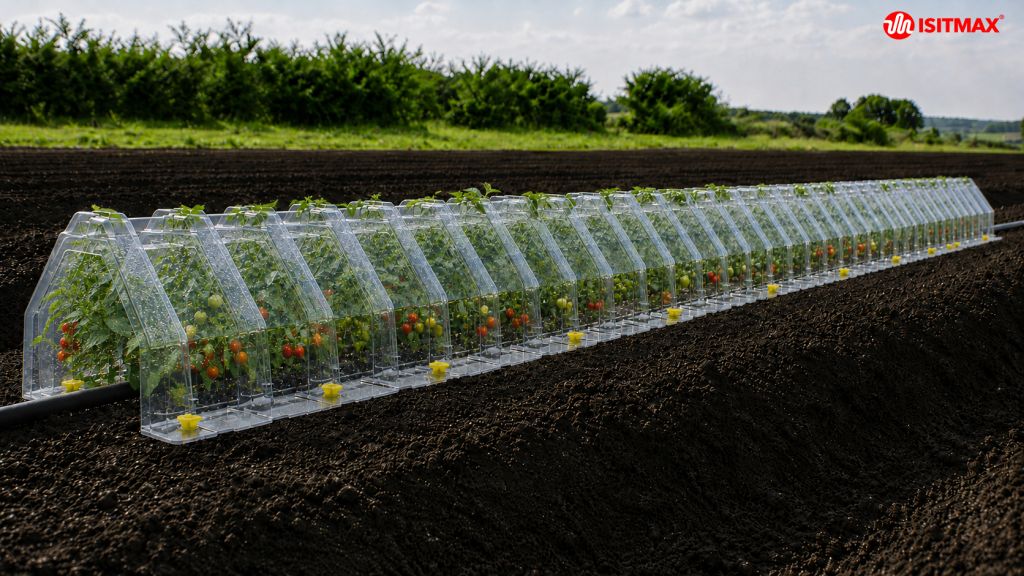
ConeCover mini greenhouse cones are transparent protective covers placed over sowing and planting rows. They create a small-scale greenhouse environment around the plants and help reduce the effect of outside conditions, especially during germination and seedling growth.
Placed one after another along the row, the cones form a continuous protected area over the growing bed. With a transparent structure that makes use of daylight and a layout that can be arranged to suit the planting rows, they can be applied to meet the needs of the growing area.
What do mini greenhouse cones do?
Protection from the elements
Young plants grown in the open are directly exposed to wind, rain and temperature changes. Mini greenhouse cones form a protective layer between the plant and the outside environment and help reduce these effects.
A microclimate under cover
The microclimate that forms under the cover makes the temperature, humidity and air movement around the plant different from the open field. This makes the cones a growing aid for the early growth stages, when plants are most sensitive.
Daylight and soil temperature
The transparent cover lets sunlight in and can help the soil warm up during the day and lose heat more slowly at night. The effect depends on sunshine, outside temperature, how the cover is placed and ventilation.
Protection from sowing to seedling growth
Mini greenhouse cones can be used to prepare the growing bed before sowing and to protect young plants after sowing. It is important for the soil to reach suitable conditions, for seeds to germinate and for seedlings to make their first growth.
Used especially between seasons, the cover creates a more sheltered area around the planting row. With suitable crops and climate conditions, it can support earlier sowing and planting. How long the cones are used depends on plant growth and the weather.
A structure that works along the row
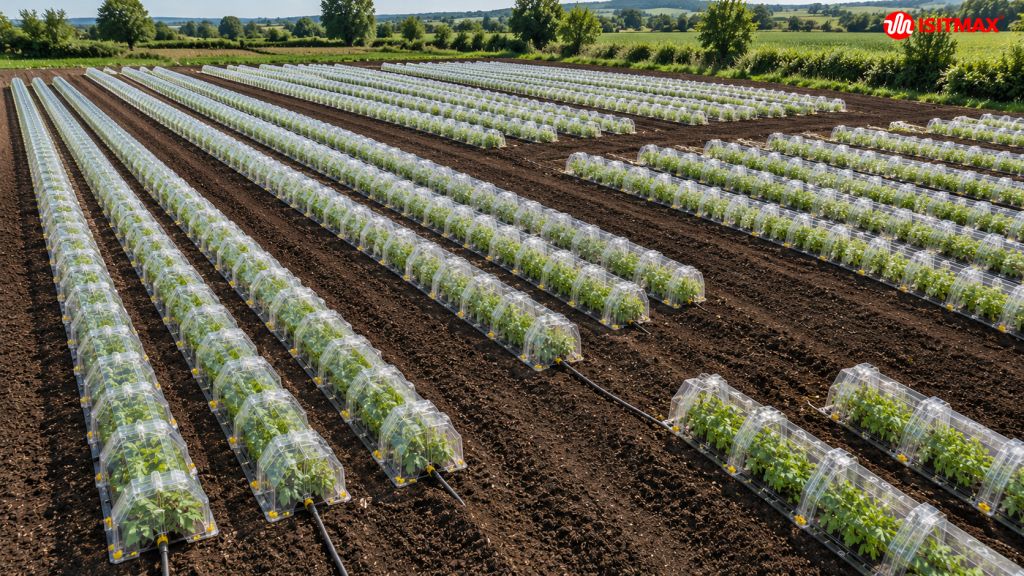
ConeCover cones are placed one after another along the growing row, so protection is concentrated on the area that is actually sown.
When planning the layout, row length and width, plant spacing, the irrigation line and access for maintenance are considered together. Leaving room for plants to grow without touching the cover is important for using the system efficiently.
This approach makes it possible to arrange specific planting rows or trial areas separately.
Use together with Root Zone heating
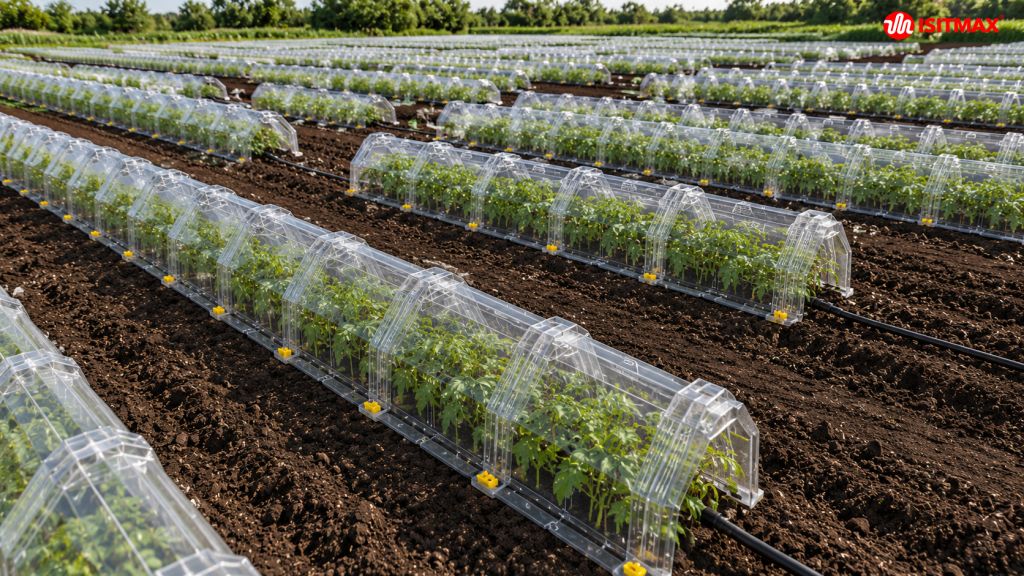
Used together with Root Zone heating, ConeCover mini greenhouse cones complement temperature management below ground with protection above ground. While the root-zone heating works in the growing bed, the cones create a sheltered environment over the plants.
The aim of using them together is to consider the conditions around the roots and the plant’s growing conditions above ground within the same application. Heating settings, the temperature under the cover and ventilation should be managed together; heating the root zone does not mean the air under the cover will be at the same temperature.
In existing root-zone heating installations, the layout of the cones can be planned according to the planting rows, irrigation layout and maintenance needs.
See our Root-Zone Heating page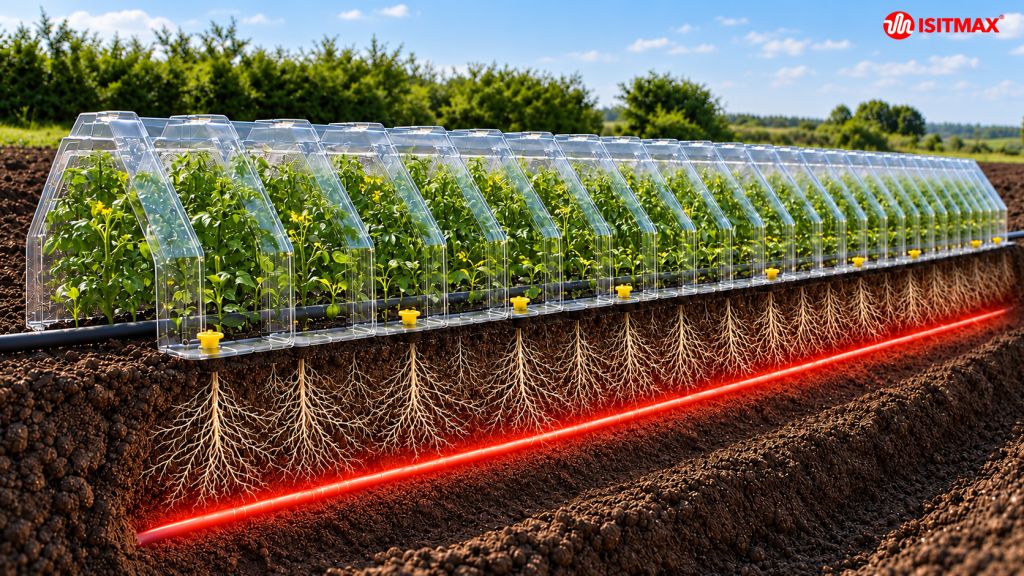
Where can they be used?
Mini greenhouse cones can be considered for different growing areas when the size of the crop and its growing needs are suitable.
Vegetables sown or planted in rows
The early growth stages of young seedlings
Growing beds that need protection between seasons
Early-season production trials
Agricultural research and comparative growing plots
Small-scale production and hobby growing
When assessing suitability, consider not only the plant’s height at planting but also the size it will reach during the time it stays under the cover.
What should be watched during use?
-
Ventilation and temperature monitoring
On sunny days the temperature under the cover can rise quickly. The cones should be ventilated according to the weather and the plants’ needs, and opened when necessary. Controlling condensation is also part of the growing routine.
-
Irrigation and soil moisture
The cover can limit how much rain reaches the growing bed directly. Irrigation should therefore be managed according to the actual moisture needs of the soil under the cover, not according to rainfall in the open field.
-
Plant growth and removing the cover
As the plant grows, it needs enough room to develop. Opening or removing the cover should be planned according to plant height and the season. When moving from protected conditions to the open field, it helps to harden the plants off gradually.
-
Flowering and pollination
For crops that need pollinating insects, insects must have access during flowering. How long the cones stay in place and how open they are should be decided with this stage of production in mind.
Frequently asked questions about mini greenhouse cones
If your question is not answered here, call us and we will answer it for your project.
Can the cones be used without root-zone heating?
Yes. Mini greenhouse cones can be used on their own as covers for protection. Whether to use them with root-zone heating is assessed according to the growing period and soil temperature.
Are they suitable for every plant?
Suitability depends on the plant’s height, how it spreads, row spacing and the growing period. Especially for use in the early growth stage, the size of the cones and the space the plant needs should be considered together.
Do they completely prevent frost damage?
The cones can help reduce the effect of cold weather, but they do not provide frost protection in every condition. The outside temperature, how long the cold lasts, the plant species and any heating capacity determine the level of protection.
How long should they stay closed?
There is no fixed period. The decision should be made by monitoring the temperature under the cover, the weather, plant growth and the need for ventilation.
Let’s plan your planting rows together
Tell us about your growing area, crop and sowing period, and we will assess the application with mini greenhouse cones and, if needed, root-zone heating.