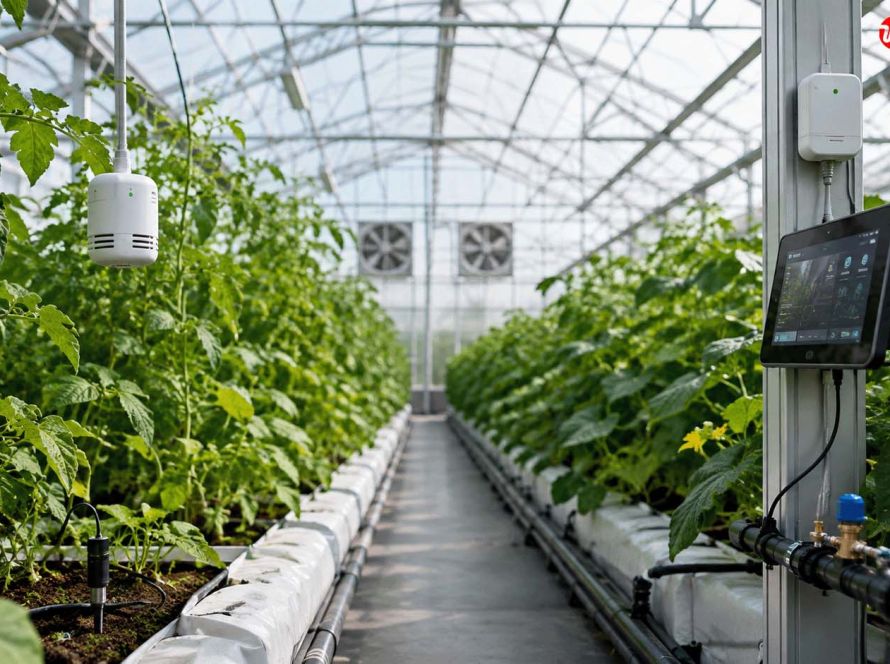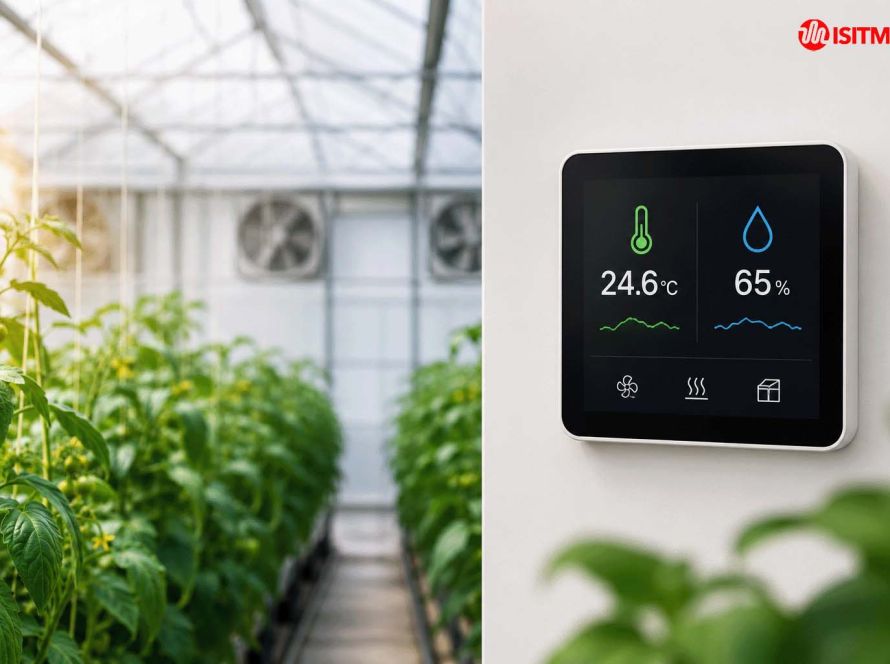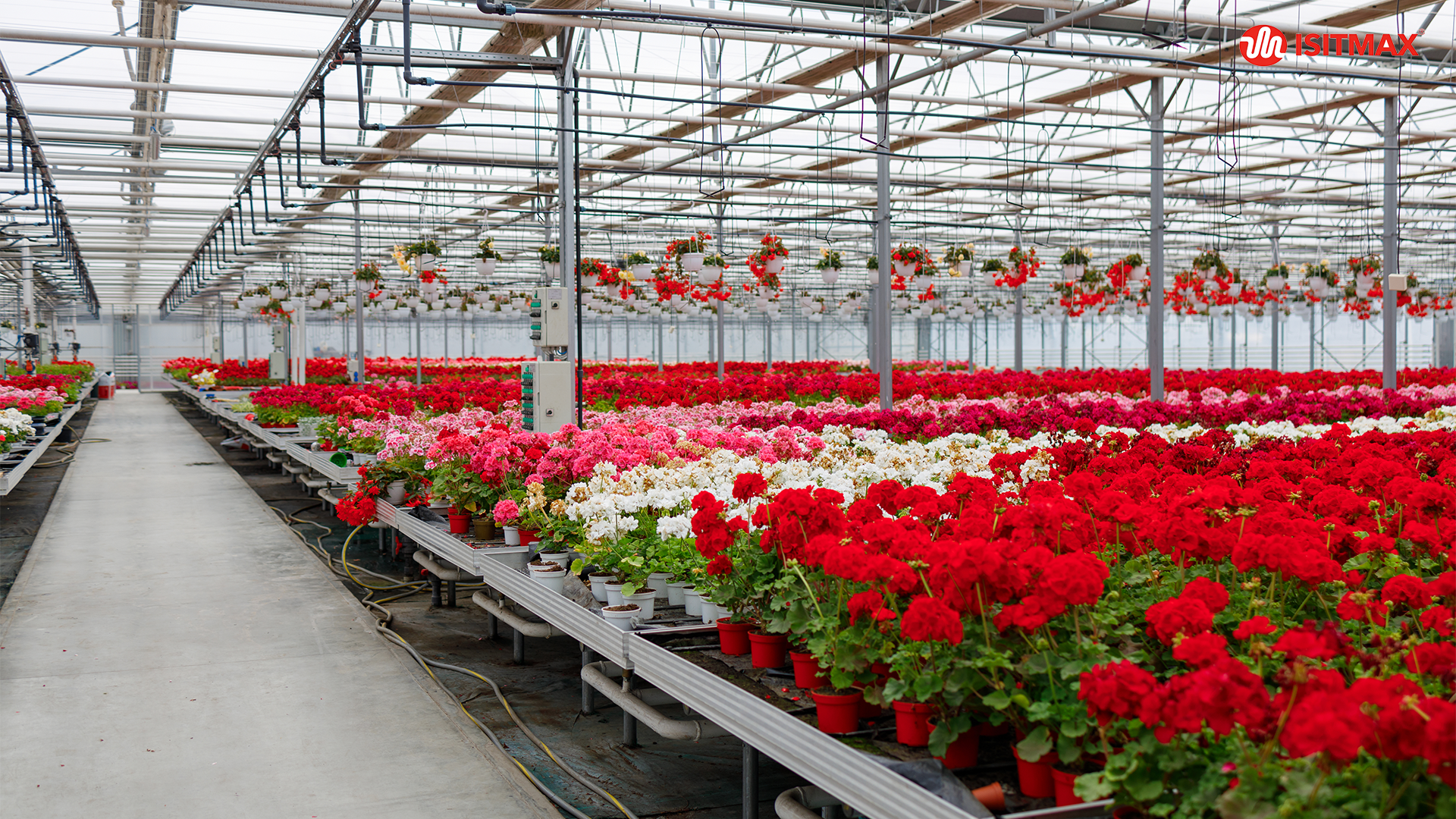
Greenhouse automation is the technical infrastructure used to monitor and manage temperature, humidity, irrigation, heating, ventilation and other production conditions through sensors and control systems. When IoT and cloud technologies are integrated, greenhouse data can also be monitored remotely, stored historically and managed through a centralized digital platform.
What Is Greenhouse Automation?
Temperature, humidity, light, irrigation and other environmental conditions inside a greenhouse continuously change throughout the day. Monitoring all of these variables manually can become difficult, especially in large-scale or high-technology greenhouse facilities.
A greenhouse automation system collects measurements from sensors and evaluates them through controllers. Based on predefined control strategies, the system can manage heating, ventilation, irrigation, fans, valves and other greenhouse equipment.
Automation can also be used to record operational data and make greenhouse performance more measurable over time.
How Does Greenhouse Automation Work?
In a typical greenhouse automation architecture, data moves from field sensors to controllers and, where required, to a cloud-based monitoring platform.
Measures temperature, humidity, water, energy or other greenhouse conditions.
Evaluates sensor data and applies predefined automation rules.
Pumps, fans, valves, heating systems and other field equipment are controlled.
Operational data can be transferred to centralized systems for remote monitoring, storage and analytics.
Which Sensors Are Used in Greenhouses?
The sensors required in a greenhouse depend on the crop, production system and level of automation. Not every greenhouse requires the same number or type of sensors.
How Does Greenhouse Heating Automation Work?
In greenhouse heating automation, temperature measurements are transferred to the control system. Heating equipment can then be activated or stopped according to target temperatures and predefined control strategies.
Different greenhouse blocks or production zones may also be managed independently when separate temperature targets are required.
In projects using root-zone heating systems, directly measuring root-zone temperature can provide more detailed control than relying only on general greenhouse air temperature.
How Does Irrigation and Fertigation Automation Work?
Greenhouse automation can also manage irrigation according to timing, duration and predefined production strategies.
Depending on the technical infrastructure, pumps, valves, irrigation zones and fertigation equipment can be managed from a centralized control system.
Recording irrigation data also makes it possible to compare water use between production periods and evaluate resource consumption more clearly.
What Is IoT in Greenhouse Automation?
IoT, or the Internet of Things, allows information generated by greenhouse field devices to be transferred between connected digital systems.
Sensors and controllers do not always connect directly to the internet. In these situations, IoT gateways can act as communication bridges between field equipment using different protocols and centralized software.
Agroteknik's greenhouse IoT data storage and cloud infrastructure approach can provide the technical foundation required to store field data centrally and use it later for analytics and AI applications.
The purpose of greenhouse automation is not simply to switch equipment on and off remotely. Its real value comes from integrating sensors, control logic, alarms, data recording and field equipment within the same technical infrastructure.
Remote Greenhouse Monitoring with IoT
When IoT and cloud infrastructure are available, greenhouse data can be transferred to centralized software over the internet.
With the appropriate permissions and communication infrastructure, users can access greenhouse information through computers, tablets or mobile devices.
Agroteknik's cloud-based greenhouse management platform can support centralized monitoring of temperature, humidity, equipment status, alarms and other operational greenhouse data.
How Do Greenhouse Alarm Systems Work?
Greenhouse automation is not only about maintaining normal operating conditions. Detecting abnormal situations quickly is equally important.
High or Low Temperature
An alarm can be generated when measured temperature moves outside the defined operating range.
Sensor Communication Loss
The system can detect when a sensor stops transmitting data or becomes unavailable.
Equipment Failure
Where feedback signals are available, equipment that does not operate as expected can trigger an alarm condition.
Abnormal System Behavior
Unexpected changes in energy use, operating time or sensor measurements can also be monitored.
Can Automation Be Added to an Existing Greenhouse?
Yes. Sensors, controllers, IoT infrastructure and remote monitoring can often be added to existing greenhouse facilities.
However, the most suitable solution depends on the existing equipment, electrical infrastructure and communication protocols already in use.
Existing control panels, sensors, field equipment and communication systems should first be evaluated. This makes it possible to determine which devices can be integrated directly and which require additional controllers or gateways.
What Should You Consider When Choosing a Greenhouse Automation System?
Define the Actual Operational Requirements
Decide which climate, irrigation and equipment variables need to be measured and controlled.
Plan the Communication Infrastructure
Data communication between sensors, controllers, gateways and centralized software should be planned from the beginning.
Maintain Local Control for Critical Systems
Critical equipment should continue operating locally when internet connectivity or cloud software becomes unavailable.
Plan for Future Expansion
Additional greenhouse blocks, sensors and future analytics systems should be considered when designing the infrastructure.
Greenhouse Automation in Turnkey Greenhouse Projects
In new greenhouse investments, designing automation together with greenhouse construction, climate control, irrigation and electrical infrastructure can simplify integration.
Within Agroteknik's turnkey greenhouse projects, sensor locations, automation controllers, IoT gateways, communication infrastructure and remote-monitoring requirements can be evaluated during the initial project stage.
This allows the greenhouse to become not only a physical production facility, but also a measurable and connected system that can support future digital and data-driven applications.
Plan Your Greenhouse Automation Infrastructure
We can evaluate sensors, automation controllers, IoT gateways, remote monitoring and control requirements for new or existing greenhouse facilities.