Greenhouse climate control automation uses sensors, controllers and field equipment to monitor and manage temperature, humidity, ventilation and heating conditions inside a greenhouse. Instead of controlling each system independently, a properly designed climate-control system coordinates multiple variables to create more stable growing conditions and make greenhouse operation measurable.
What Is a Greenhouse Climate Control System?
A greenhouse climate control system is the combination of sensors, automation controllers and mechanical equipment used to manage the environmental conditions surrounding the crop.
Depending on the greenhouse, the system may monitor and control temperature, humidity, ventilation, heating, air circulation and other environmental variables.
Climate control is usually integrated with broader greenhouse automation so that environmental measurements and equipment operation can be managed through the same control infrastructure.
How Does Greenhouse Climate Control Automation Work?
A basic climate-control loop begins with environmental measurement and ends with the operation of the required greenhouse equipment.
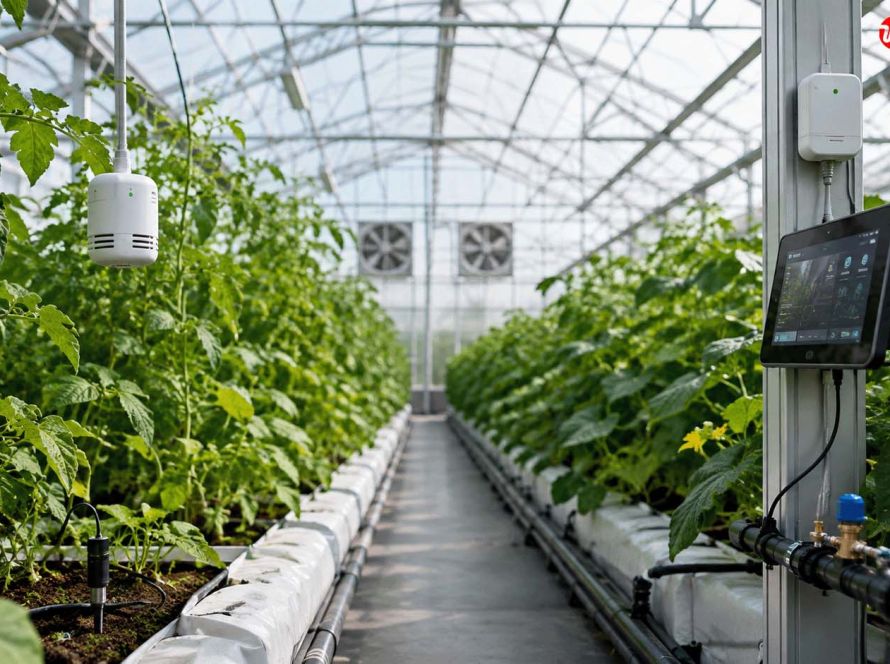
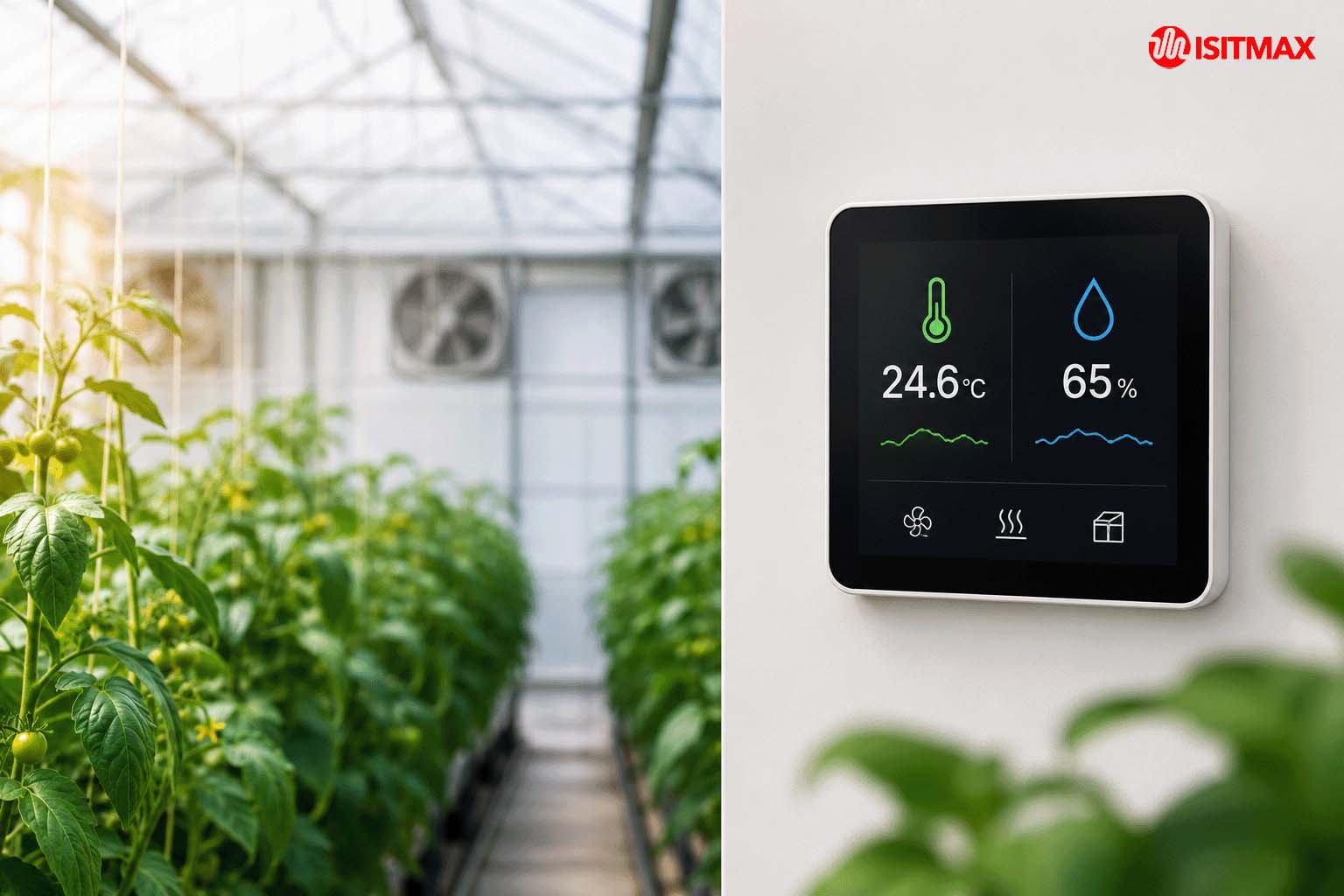
Sensors continuously measure temperature, humidity and other variables.
The automation controller compares measurements with target conditions.
Heating, ventilation, fans or other equipment are operated as required.
System response, alarms and environmental data can be recorded and reviewed.
Which Sensors Are Used for Greenhouse Climate Control?
Air Temperature Sensors
Measure greenhouse air temperature and provide the primary input for heating and ventilation control.
Relative Humidity Sensors
Monitor humidity conditions and help evaluate ventilation and moisture-management requirements.
Outdoor Weather Sensors
Outdoor temperature, wind and other measurements can be used together with internal greenhouse data.
Root-Zone Temperature Sensors
Measure temperatures directly around the crop root area where targeted heating systems are used.
Light and Solar Radiation Sensors
Provide information about incoming solar energy and changing greenhouse heat loads.
Equipment Feedback Signals
Confirm whether fans, pumps, motors or other controlled equipment are operating as expected.
How Is Greenhouse Temperature Controlled?
Greenhouse temperature changes according to outdoor weather, solar radiation, crop activity, ventilation and heating-system operation.
Temperature automation uses sensor measurements and predefined targets to determine when heating or ventilation equipment should operate.
Large greenhouse facilities can also be divided into multiple climate zones so that different blocks are monitored or controlled independently.
Where targeted heating is required, root-zone heating systems can be integrated with temperature measurement and automation.
How Is Humidity Controlled in a Greenhouse?
Greenhouse humidity is affected by crop transpiration, irrigation, air temperature and ventilation.
Humidity control therefore cannot always be treated independently from temperature control.
Depending on the greenhouse design and climate conditions, humidity management may involve ventilation, air circulation, heating and irrigation strategy.
The control system should evaluate how these systems interact rather than attempting to maintain humidity using a single piece of equipment.
How Does Greenhouse Ventilation Automation Work?
Greenhouse ventilation helps remove excess heat and moisture and introduces outside air into the production environment.
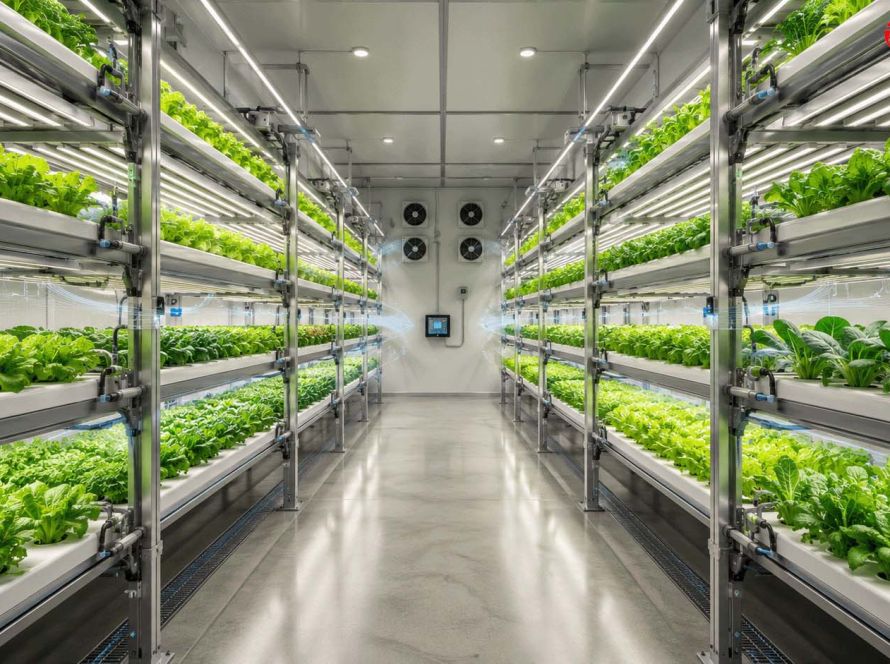
Depending on the greenhouse structure, ventilation can include roof vents, side vents, motorized openings, extraction fans or circulation fans.
An automated ventilation system may evaluate greenhouse temperature, humidity and outdoor conditions before deciding when and how far ventilation equipment should operate.
This is particularly important because excessive ventilation can also affect heating demand and internal climate stability.
Greenhouse temperature, humidity, heating and ventilation should not be controlled as four unrelated systems. Each one influences the others, so climate automation should coordinate them as a complete system.
Greenhouse Heating and Climate Control
During cold periods, heating systems maintain greenhouse temperatures within the required operating range.
A climate-control system can monitor heating demand according to greenhouse temperature, outdoor temperature, zone conditions and configured control targets.
Historical operating data can also be used to compare heating runtime with climate conditions and energy consumption.
This type of information becomes useful for evaluating greenhouse energy performance and identifying periods of unusually high consumption.
Why Should Greenhouses Use Multiple Climate Zones?
Large greenhouse facilities may not have identical conditions across the entire production area.
Differences in orientation, crop type, equipment layout, ventilation and heating distribution can create different climate conditions between greenhouse blocks.
Dividing the facility into climate zones can provide more representative measurements and allow different control strategies where required.
| Single-Zone Control | Multi-Zone Control |
|---|---|
| Uses fewer measurement points | Provides more detailed information across greenhouse blocks |
| May be suitable for smaller uniform facilities | Useful for large or operationally different production areas |
| One climate strategy is applied broadly | Different zones can use different targets or control logic |
What Alarms Are Used in Greenhouse Climate Control?
High Temperature
Alerts operators when greenhouse temperature exceeds a defined limit.
Low Temperature
Can indicate insufficient heating or unexpected environmental conditions.
High Humidity
Helps operators identify periods when humidity remains above configured limits.
Sensor Failure
Missing or abnormal sensor data can be detected before it affects control logic.
Equipment Failure
Feedback signals can indicate when fans, motors or heating equipment fail to operate.
Communication Loss
IoT or controller communication problems can be monitored separately.
Can Greenhouse Climate Control Be Monitored Remotely?
Yes. When automation controllers are connected to IoT and cloud infrastructure, greenhouse climate measurements can be transferred to a centralized monitoring platform.
Operators can remotely review temperature, humidity, alarm records, equipment status and historical trends.
Agroteknik's cloud-based greenhouse management platform can support centralized monitoring and historical storage of greenhouse operating data.
How Can Climate Data Be Used for Greenhouse Analytics?
Once greenhouse climate data is stored over longer periods, it can be compared with energy consumption, irrigation and production results.
This allows greenhouse operators to investigate questions such as:
Temperature Deviations
Which greenhouse zones spent the most time outside target temperatures?
Heating Performance
How did heating runtime change as outdoor temperatures decreased?
Humidity Trends
Which periods or greenhouse blocks experienced persistent high humidity?
Production Relationships
How did climate conditions compare with production performance?
Common Greenhouse Climate Control Mistakes
Using Too Few Sensors
A single sensor may not represent conditions accurately across a large greenhouse facility.
Incorrect Sensor Placement
Sensors installed near heaters, vents or direct sunlight may produce measurements that do not represent crop conditions.
Controlling Systems Independently
Heating and ventilation strategies can conflict if their interaction is not considered.
Ignoring Sensor Maintenance
Calibration drift or failed measurements can result in incorrect control decisions.
Climate Control in Turnkey Greenhouse Projects
Greenhouse climate control should ideally be planned together with the structure, heating, ventilation, irrigation and automation systems.
Within Agroteknik's turnkey greenhouse projects, climate requirements, sensor locations, heating capacity, ventilation, automation and IoT infrastructure can be evaluated during the initial engineering stage.
This integrated approach makes it easier to coordinate physical greenhouse systems with the automation architecture that will manage them.
What Should You Consider When Designing Greenhouse Climate Automation?
Define Crop Climate Requirements
Temperature and humidity strategies should be based on production requirements rather than generic values.
Plan Sensor Locations Carefully
Measurement points should represent actual greenhouse conditions and production zones.
Coordinate Heating and Ventilation
Climate systems should be controlled together to avoid conflicting operation and unnecessary energy use.
Plan Alarms and Remote Monitoring
Critical limits, equipment feedback and communication failures should be included in the automation strategy.
Plan Your Greenhouse Climate Control System
We can evaluate temperature, humidity, heating, ventilation, sensors, automation, IoT and remote-monitoring requirements for your greenhouse project.