
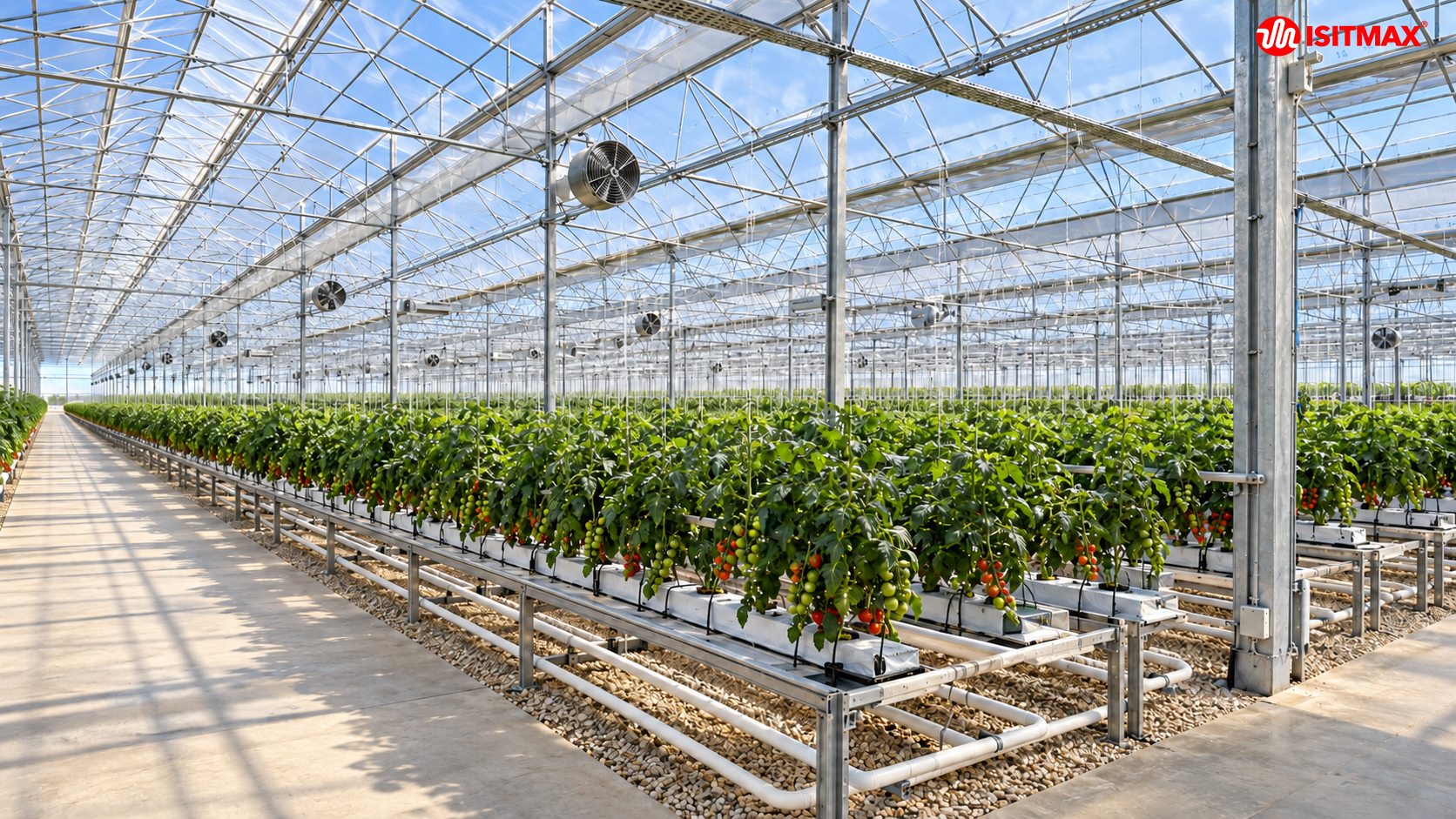
Greenhouse Heating Systems
From hot-water pipe heating to heat pumps, from root-zone heating to hot-air heaters, we design the right heating system for your greenhouse, install it with our own team and commission it to work together with climate automation.
- 7heating solutions
- Root zonetargeted heating
- Automationtemperature-based control
- Own teaminstallation and service
Greenhouse heating determines both yield and cost
In cold periods, keeping the greenhouse within the crop’s temperature range is decisive for plant growth, flowering and fruit set. Insufficient heating leads to yield losses and frost risk, while uneven heat distribution can cause different growth and disease risk in different parts of the greenhouse.
Heating is also one of the biggest operating costs of a greenhouse. Choosing the right system, reducing heat loss and running the heating only as much as needed through automation therefore directly affect both crop quality and the energy bill.
- Balanced temperature Even heat throughout the greenhouse.
- Protection from frost Production protected on cold nights.
- Controlled energy use Heating runs only as much as needed.
- Healthy growth The right environment for roots and plants.
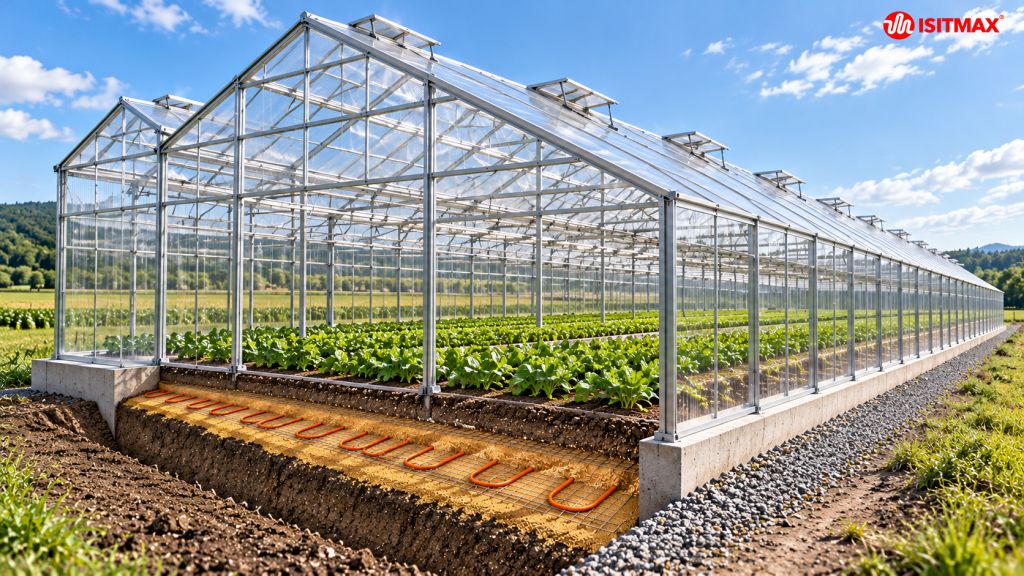
Types of greenhouse heating systems
Every greenhouse has different heat demand, energy options and crops. Depending on your project, we plan and install one or a combination of the systems below.
Hot-water pipe heating
Water heated by a boiler or heat pump circulates through pipes laid inside the greenhouse and releases heat into the space. It distributes heat evenly throughout the greenhouse and can be controlled precisely by automation.
Boiler systems
The heart of a hot-water heating system, producing the hot water the greenhouse needs. Boiler capacity is set by the greenhouse’s heat demand, and the fuel type by the local energy source and its cost, at the design stage.
Heat pumps
Running on electricity, a heat pump makes heat taken from the surroundings usable for greenhouse heating. Correctly designed, it is an efficient and cleaner heating option.
Hot-air heaters
Fan heaters warm the air directly and heat the greenhouse quickly. Installation is relatively simple; the air distribution must be planned carefully for even heat.
Electric heating
Heating cables can heat the root zone, growing benches or specific areas in a targeted way. Preferred where local, controlled heating is needed.
Root-zone heating systems
Instead of heating all the greenhouse air, root-zone heating takes heat directly to the plant’s roots. It works with water circulating through pipes in the root zone.
See root-zone heatingGround-source root-zone heating
Heat exchangers deep in the ground carry the stable soil heat via a circulation pump to pipes laid below the roots. Used for heating in winter and cooling in summer.
See root-zone heatingEnergy (thermal) screens
Not a heating system but a complement to it. Closing at night, the screen reduces heat loss through the roof and helps the heating system run less.
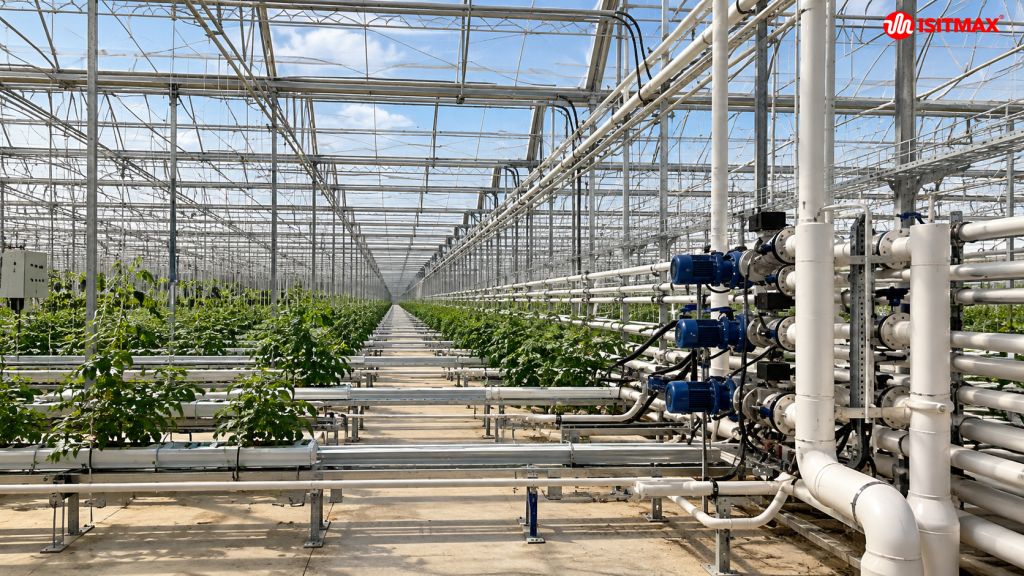
Hot-water heating installation
Water heated by a boiler or heat pump is sent through pumps and distribution lines to the pipes inside the greenhouse. The heating circuits are connected to the climate control system and run to the day and night targets.
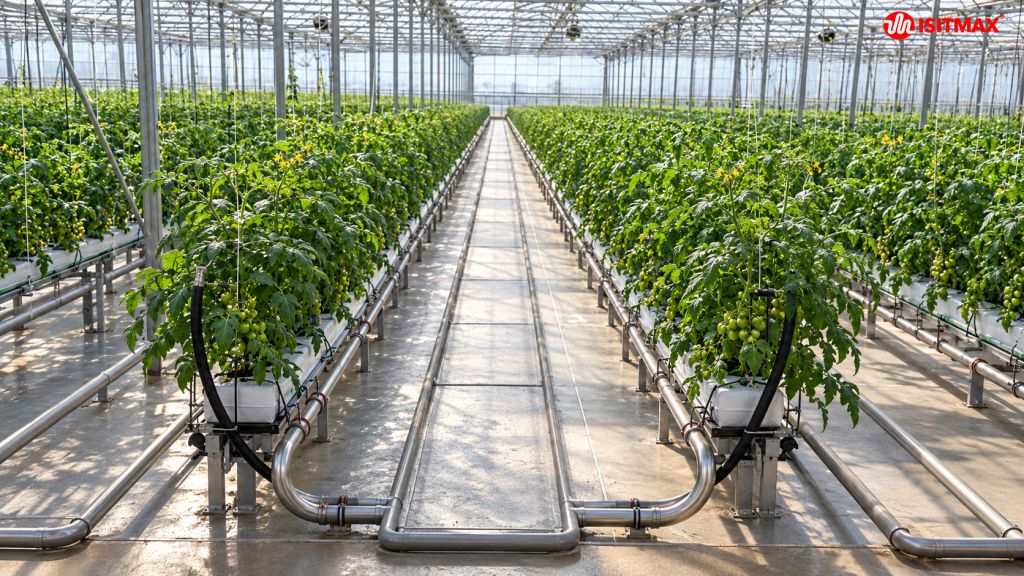
Even heat along the rows
Pipes laid between the plant rows distribute heat evenly throughout the greenhouse, so no corner stays cold while another gets too warm.
Greenhouse heating systems compared
Each system has its own strengths and points to watch. In most commercial greenhouses, the best results come from planning several systems together.
| System | How does it heat? | Main strength | Points to watch |
|---|---|---|---|
| Hot-water pipe heating | Hot water circulating in pipes | Even heat distribution, precise control | Requires a boiler or heat pump and pipe infrastructure |
| Hot-air heater | Heats the air directly | Fast warm-up, simple installation | Air distribution must be planned for even heat |
| Heat pump | Transfers heat from the surroundings | Efficient and cleaner heating | Correct capacity and design are critical |
| Root-zone heating | Delivers heat to the root zone | Directs energy to where the plant needs it | May need to be planned with air heating |
| Electric heating | Local heat from heating cables | Targeted, controlled heating | Electrical infrastructure and energy cost must be considered |
This comparison is for general information; the right solution for your greenhouse is determined through a site assessment and design.
How to choose a greenhouse heating system
There is no single “best” heating system; the right one depends on the conditions of your greenhouse. During design we weigh up the factors below together and recommend the most suitable solution.
Many greenhouses need both the air and the root zone heated. In that case, planning hot-water pipe heating together with root-zone heating, for example, can make heat use more efficient.
Get advice for your greenhouse- 1
Local climate
The lowest winter temperatures and the length of the cold period determine the heating capacity needed.
- 2
Greenhouse type and covering
Glass, polycarbonate and plastic coverings insulate differently; heat loss is calculated accordingly.
- 3
Temperature needs of the crop
Every crop needs a different temperature range by day and by night.
- 4
Energy source and cost
The energy source available locally and its unit cost are decisive in choosing a system.
- 5
Greenhouse size
The larger the area and volume, the more important it is to distribute heat evenly.
- 6
Investment and operating budget
The initial investment and the annual operating cost should be weighed together.
6 ways to reduce greenhouse heating costs
The most effective way to cut heating costs is not to install a more powerful system, but to keep the heat you produce and put it where it is needed.
- Use an energy screen A screen that closes at night reduces heat lost through the roof.
- Choose a well-insulating covering The insulation value of the covering directly affects heat loss.
- Put heat where it is needed Root-zone heating targets the roots instead of heating all the air.
- Set day and night targets Automation adjusts temperature targets by time of day.
- Make the greenhouse airtight Air leaks at doors, vents and joints cause heat loss.
- Maintain the system regularly Boilers, pumps and pipes work more efficiently when they are well maintained.
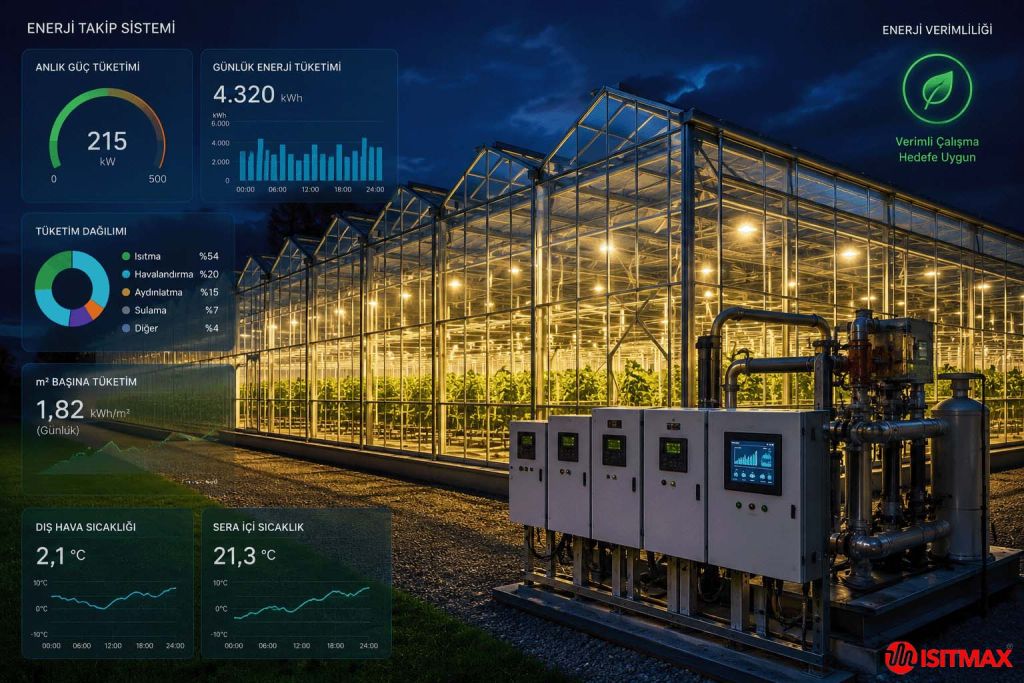
Let the heating run only as much as needed
We connect the heating system to climate control automation. The Dağdelen climate control system monitors the inside temperature with sensors and runs the heating to the day and night values you set; it tracks the heating water temperature and works with the energy screen to reduce heat loss.
- Separate temperature targets for day and night
- Monitoring of the heating water temperature
- Screens, ventilation and heating managed together
- Remote monitoring and control over the internet
- Day / nightseparate temperature targets
- Heating watertemperature monitored
- Energy screenworks with the heating
- Remotemonitoring and control
One team, from site visit to service
We plan the heating system for your greenhouse, install it with our own team, connect it to automation and support you after the sale.
- 01
Site visit and heat demand
Heat demand is assessed based on the greenhouse area, covering type, local climate and crop.
- 02
System selection and design
The heating system, capacity and distribution layout are defined for your project.
- 03
Installation
The heating system and its connections are installed by our own team.
- 04
Automation and commissioning
Heating is connected to the climate control system; set points are entered and training is given.
- 05
After-sales service
Support and service keep the system running efficiently for many years.
Think of your greenhouse as a whole
Frequently asked questions about greenhouse heating systems
If your question is not answered here, call us and we will answer it for your project.
What greenhouse heating systems are there?
The main greenhouse heating systems are hot-water pipe heating, the boilers and heat pumps that produce hot water for it, warm-air heaters (fan heaters), electric heating and root-zone heating. Energy screens complement heating by reducing heat loss.
Which heating system is best for my greenhouse?
There is no single right answer. Winter temperatures in the region, the greenhouse type and covering, the crop’s temperature needs, the available energy source and the budget are considered together. In most commercial greenhouses, combining several systems gives the best result.
What is the difference between root-zone heating and air heating?
Air heating raises the temperature of the air inside the greenhouse. Root-zone heating delivers heat directly to the plant’s root zone and helps keep the area around the roots at a suitable temperature without raising all the greenhouse air to high temperatures.
Can a heat pump be used in a greenhouse?
Yes. A heat pump can produce the hot water used for greenhouse heating efficiently with electricity. It is important that its capacity is sized correctly for the greenhouse’s heat demand and properly designed.
What does an energy screen do?
An energy (thermal) screen closes, especially at night, to reduce heat loss through the roof. The heating system then runs less and energy consumption falls. It can be managed automatically by the climate control system together with the heating.
How can greenhouse heating costs be reduced?
Using an energy screen, choosing a covering with good thermal insulation, delivering heat where it is needed with root-zone heating, setting day and night temperature targets through automation, preventing air leaks and maintaining the system regularly all help reduce heating costs.
Can the heating system be controlled by automation?
Yes. We connect the heating system to the climate control automation. The system monitors greenhouse temperature with sensors, runs the heating according to your setpoints and tracks the heating water temperature. Remote monitoring and control over the internet are also possible.
Who installs and services the system?
Agroteknik installs the heating system with its own team, connects it to the automation and commissions it. After-sales support and service are provided.
What does the price of a greenhouse heating system depend on?
The price depends on the greenhouse area and covering, the local climate, the heating capacity required, the chosen system and energy source, and the scope of root-zone heating and automation. A project-specific quote is prepared after the site assessment.
Get a heating quote for your greenhouse
Tell us your greenhouse area, covering type, location and crop, and our team will get back to you with a suitable heating solution.