
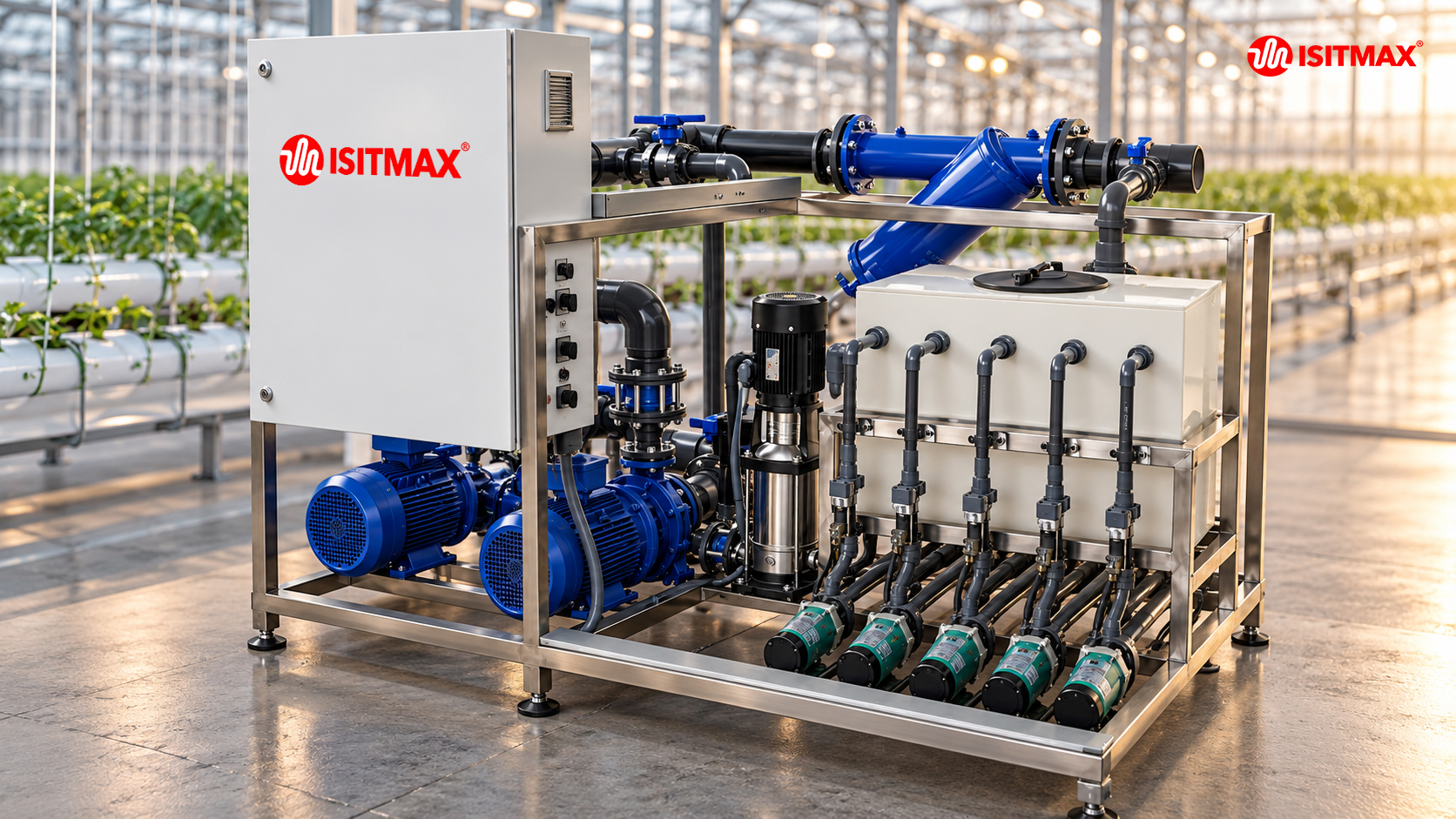
Irrigation and Fertigation Automation
Keep every drop under control with fertigation automation that prepares the nutrient solution by EC and pH, delivers it to the right valve groups at the times you programme and stops irrigation if a limit is exceeded.
- 7 + 1fertilizer and acid tanks
- 10separate irrigation programmes
- 320valves at most
- EC · pHcontrolled dosing
The right nutrients, at the right time, in the right amount
One of the most important factors in greenhouse yields is how accurately the nutrient solution is prepared. With manual fertilization, ratios can change each time, irrigation times can be missed and mistakes are only noticed when symptoms show on the plants.
Irrigation and fertigation automation prepares the solution with the same accuracy at every irrigation, continuously measures EC and pH and opens the relevant valve groups at the times you programme. Nutrient application becomes measurable, recorded and repeatable.
- Precise dosing Fertilizer and acid are added based on live readings.
- A uniform solution Pre-mixing takes place in the mix tank.
- Safe irrigation The system stops itself if a limit is exceeded.
- Measurable consumption Water and fertilizer use is recorded.
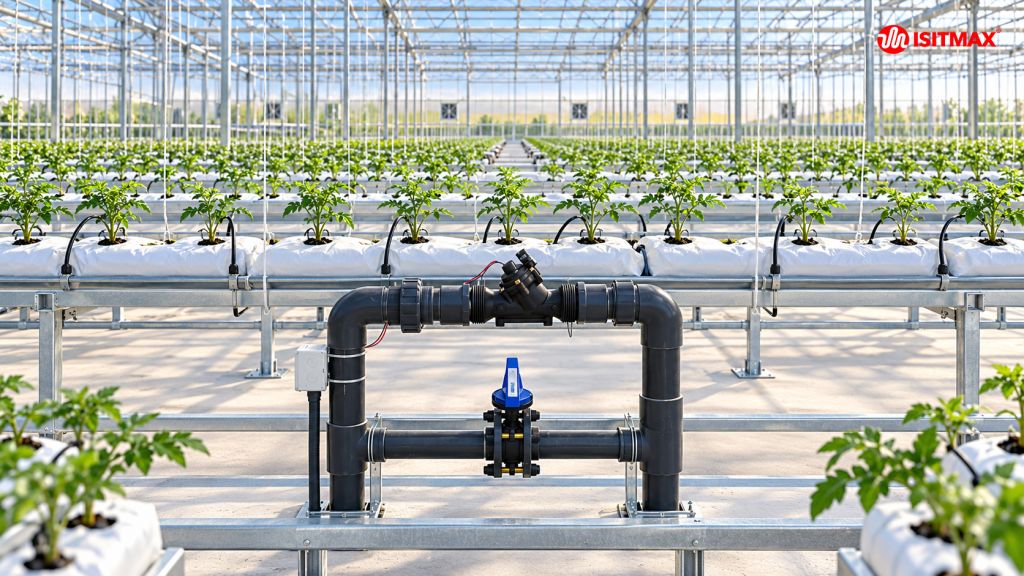
Irrigation and fertilization in one system
Fertigation means delivering fertilizer together with the irrigation water, through the drip lines, directly to the plant’s root zone. The word combines “fertilization” and “irrigation”.
In greenhouses, and especially in soilless production, plants get almost all of their nutrients from the irrigation water. That is why preparing the solution in the right ratios at every irrigation has a direct effect on yield. Irrigation and fertigation automation is the system that does this with the same accuracy every time, and measures and records it.
In soil-grown greenhouses, too, fertigation helps keep fertilizer use under control by delivering it to the root zone when and in the amount the plant needs.
- EC (electrical conductivity)
- A measure of the fertilizer (salt) concentration in the nutrient solution, usually expressed in mS/cm. The higher the EC, the more concentrated the solution.
- pH
- The acidity or alkalinity of the solution. To take up nutrients, the plant needs the pH kept within a range suited to the crop; the acid tank maintains this balance.
- Nutrient solution
- The liquid prepared by mixing fertilizer and acid into the irrigation water in set ratios and delivered to the plants through drip lines.
- Drainage
- The water the plant does not use, which drains out of the growing medium. The drainage volume is an important indicator of the plant’s water consumption.
From tank to plant in four steps
The fertigation machine prepares the solution afresh before each irrigation and checks the values throughout.
- 01
Doses
A magnetic pump feeds solution from the fertilizer and acid tanks into the mixing tank through a two-way valve system, as needed.
- 02
Measures
Fixed sensors on the system measure the EC and pH of the mix in real time.
- 03
Balances
Once the set value is reached, flow into the mixing tank stops; excess fertilizer returns to the tank through the return line.
- 04
Irrigates
At the programmed time, the ready nutrient solution goes to the relevant valve group and reaches the plants through the drip lines.
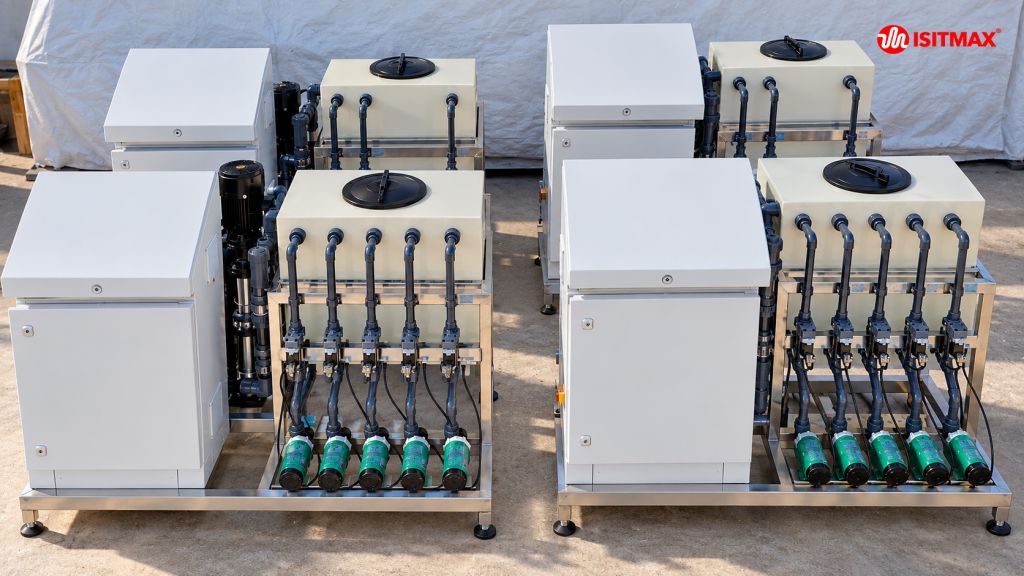
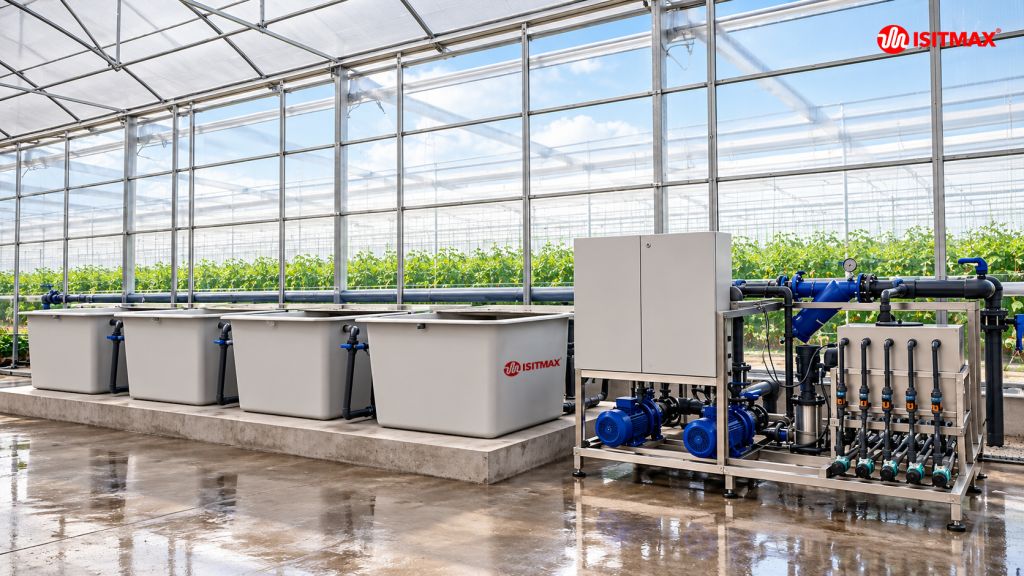
Tanks and dosing unit
Solution drawn from the fertilizer and acid tanks is dosed based on live EC and pH readings; pre-mixing in the mix tank produces a uniform nutrient solution.
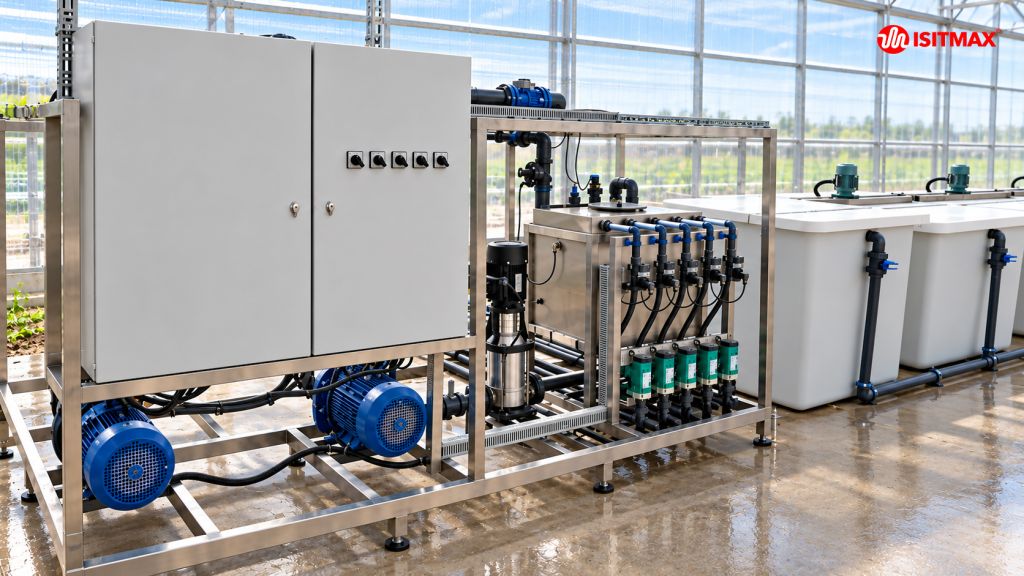
Control panel
Pumps, dosing channels and valve groups are managed from one panel. If a measured value goes outside the set limits, the system stops irrigation.
Everything you need for precise irrigation
From dosing to filter cleaning, from drainage monitoring to alarms, the system manages every step of irrigation and fertilization from a single unit.
EC and pH controlled dosing
Fertilizer can be dosed by EC-pH control or proportionally, and both methods can be combined.
Pre-mixing in a mix tank
Water and fertilizer are first combined in a mixing tank, so the plants receive a more uniform nutrient solution.
Radiation-based irrigation
Using data from the solar radiation sensor, irrigation can be started according to the amount of light reaching the plants.
Drainage water control
Data on the drained water is used to set the volume and number of irrigations according to need.
Alarm system
If set limits are exceeded, irrigation stops and an audible alarm alerts the user.
Agitator control
Fertilizer that settles at the bottom of the tanks is stirred before irrigation to obtain a uniform solution.
Automatic filter cleaning
Filter cleaning is triggered by pressure difference, irrigation volume, time or a combination of these.
Water and fertilizer meters
Meter inputs let you track the amounts of water and fertilizer used.
Three pumps and a bypass
Up to 3 different pumps can be connected for different pressure and flow needs; the bypass makes high-volume irrigation easier.
Manual fertilization or fertigation automation?
Manual fertilization may seem enough for small areas, but as the greenhouse grows and crops diversify, the need for accuracy, time and records makes automation essential.
| Topic | Manual fertilization | Fertigation automation |
|---|---|---|
| Dosing accuracy | Ratios can vary from batch to batch | The same accuracy at every irrigation, based on live EC-pH readings |
| EC and pH monitoring | Manual measurement, usually after a problem appears | Continuous measurement with sensors and limit alarms |
| Irrigation timing | Depends on staff keeping track | Programmed times, radiation and drainage data |
| Zone management | The whole greenhouse is often irrigated with one programme | 10 separate programmes for 10 groups |
| Records and traceability | Based on notebooks or memory | All irrigation activity recorded and viewable in charts |
| When something goes wrong | Noticed only when symptoms appear on the plants | Irrigation stops and an alarm sounds when a limit is exceeded |
| Remote management | Not possible | Remote control over the internet |
Each zone gets its own programme
You can divide different crops or sections of your greenhouse into separate irrigation groups. A separate programme is created for each of the 10 groups; each group can run at 4 different times, and a separate duration or water volume can be set for each time slot.
Besides fixed times, irrigation can be started as light increases based on solar radiation data, and drainage data can adjust the volume and number of irrigations to the plant’s actual consumption.
- 10 groups, 10 separate programmes
- 4 time slots per group
- Irrigation by duration or volume
- Start triggered by radiation and drainage
For illustration only; the programme is prepared with you for your crop and greenhouse.
Dağdelen irrigation and fertigation machine
Agroteknik is an authorized dealer of Dağdelen greenhouse automation systems. The number of tanks, pumps and valves is planned in the project according to your irrigated area and group requirements.
Request a quote for your project| Fertilizer tanks | 7 fertilizer tanks + 1 acid tank (8 in total) |
|---|---|
| Irrigation programmes | 10 separate programmes for 10 groups |
| Valve control | 16 valves as standard, expandable to 320; 32 valves per group |
| Time slots | Each group can run at 4 different times, with a separate duration or volume for each slot |
| Dosing | EC-pH controlled, proportional or combined |
| Pumps | Connection of 3 different pumps, bypass system |
| Measurement and monitoring | EC and pH sensors, water and fertilizer meter inputs, solar radiation and drainage data |
| Safety | Audible alarm that stops irrigation when limits are exceeded |
| Data and remote access | Logging, monitoring, programming and charts on a computer; remote control over the internet |
Values are manufacturer data.
Record your irrigation and manage it remotely
With a computer connection, all irrigation activity is recorded. You can follow all irrigation functions live, programme from the computer and review the data in charts. Remote control is possible over an internet connection.
- Live irrigation and dosing status
- Past data in charts
- Programming from the computer
- Remote control over the internet
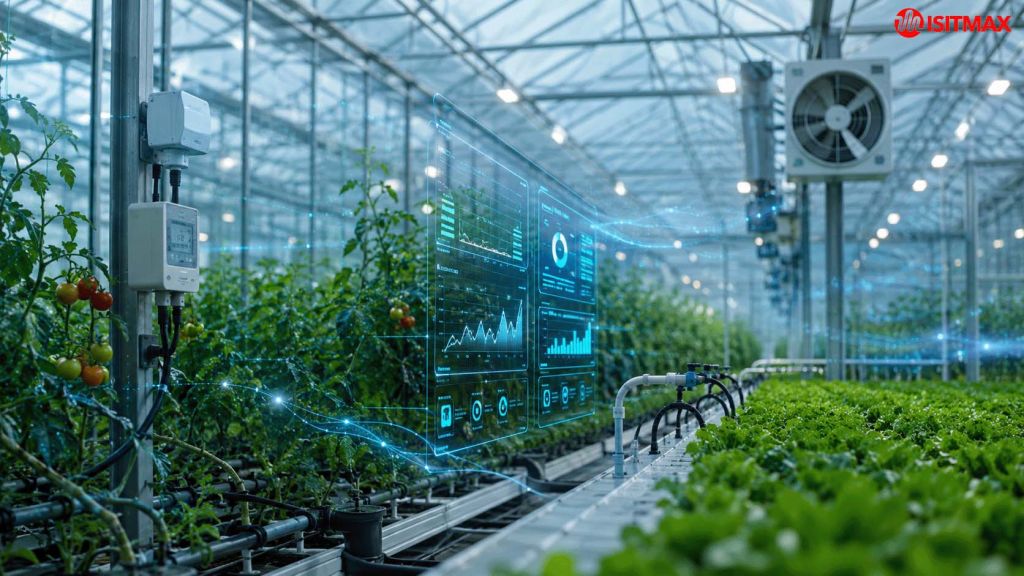
6 points that improve fertigation results
Performance depends as much on correct installation and use as on the machine itself. We go through these points with you during design and commissioning.
Have the water analysed
The EC, pH and mineral content of the irrigation water are the basis of the fertilizer programme. A water analysis before installation is recommended.
Choose the right filtration
To prevent drippers from clogging, a filter system suited to the water source should be installed and cleaned regularly.
Plan balanced valve groups
When lines in the same group run at similar flow and pressure, every plant receives the same amount of solution.
Calibrate the sensors regularly
Accurate EC and pH sensors mean accurate dosing. Calibrate them at regular intervals as recommended by the manufacturer.
Prepare the fertilizer tanks correctly
Fertilizers that react and form precipitates (e.g. calcium fertilizers with sulphate or phosphate fertilizers) must be prepared in separate tanks.
Keep an eye on drainage
Especially in soilless production, monitor the drainage volume and values and update the irrigation programme to the plant’s real needs.
Where is it used?
Fertigation automation can be used for open-field irrigation as well as in greenhouses. The system is configured for the size of your irrigated area and the variety of your crops.
- Soilless (hydroponic) production
- Soil-based greenhouse production
- Seedling greenhouses
- Glass, polycarbonate and plastic greenhouses
- Open-field irrigation
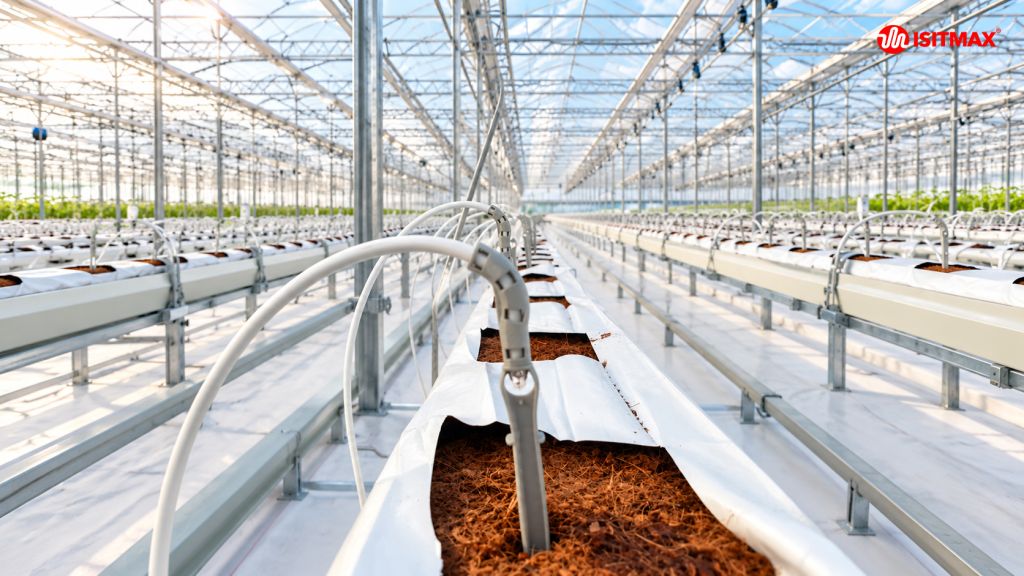
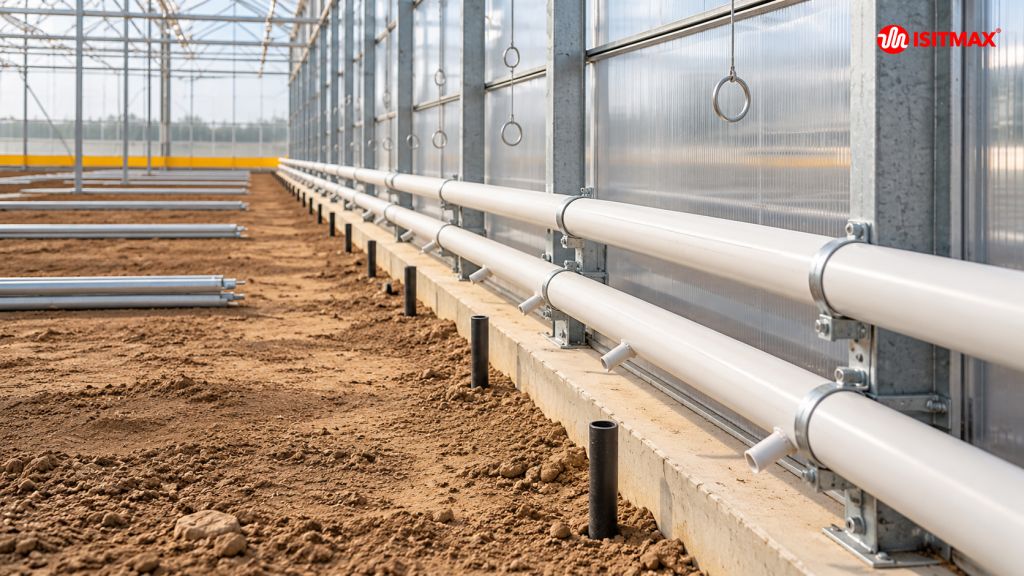
One team, from site visit to service
We plan fertigation automation for your greenhouse, install it with our own team and support you after the sale.
- 01
Site visit and needs analysis
We look at the water source, irrigated area, crop and valve groups on site.
- 02
System planning
Tanks, pumps, valves, sensors and irrigation groups are planned for your project.
- 03
Installation
The fertigation unit, tanks, valves and connections are installed by our own team.
- 04
Commissioning and training
Irrigation programmes and fertilizer settings are entered with you, and user training is given.
- 05
After-sales service
Support and service keep the system running smoothly for many years.
Think of your greenhouse as a whole
Frequently asked questions about irrigation and fertigation automation
If your question is not answered here, call us and we will answer it for your project.
What is irrigation and fertigation automation?
It is a system that mixes fertilizer and acid solutions with water in set ratios and automatically delivers the resulting nutrient solution to the right valve groups at programmed times. In greenhouse growing it is also known as fertigation.
How many fertilizer tanks can be connected?
According to the manufacturer, a total of 8 tanks can be connected to the Dağdelen fertigation machine we use: 7 fertilizer tanks and 1 acid tank.
How many valves can the system control?
It controls 16 valves as standard, and this can be increased to 320 valves. 10 irrigation groups can be created, and each group can control 32 valves.
Why are EC and pH control important?
EC shows the fertilizer concentration in the nutrient solution and pH shows its acidity. Both values must be kept in the right range for the crop so that the plant can take up nutrients. The system measures these values continuously with sensors and doses accordingly.
What happens if values go out of range?
When the set lower or upper limits are exceeded, the alarm system stops irrigation and warns the user with an audible alarm. This prevents incorrect dosing from reaching the plants.
Can I manage irrigation and fertigation remotely?
Yes. With a computer connection, all irrigation activity is recorded, can be followed live and programmed. Remote control is possible over an internet connection.
Who installs and services the system?
As an authorized Dağdelen dealer, Agroteknik installs and commissions the system with its own team and provides user training. After-sales support and service are provided.
What is the difference between fertigation and drip irrigation?
Drip irrigation is an irrigation method that delivers water to the base of the plant through lines and drippers. Fertigation means giving fertilizer together with the water through this drip irrigation system. Fertigation automation makes fertigation measured and programmed.
Is a water analysis needed before installing fertigation automation?
It is recommended. The EC, pH and mineral content of the irrigation water are basic data for setting the fertilizer program and the acid requirement. A water analysis also helps in choosing the right filter.
Is fertigation automation essential in soilless growing?
In soilless growing, the plant takes almost all of its nutrients from the nutrient solution, and the growing medium has little buffering effect. Continuous control of EC and pH is therefore critical for yield in soilless greenhouses.
What does the price depend on?
The price depends on the irrigated area, the number of valves and groups, tank and pump requirements, the sensors used and the installation conditions. A project-specific quote is prepared after the site assessment.
Get a fertigation automation quote for your greenhouse
Tell us about your irrigated area, your crops and the valve groups you need, and our team will contact you for a site assessment and quote.