
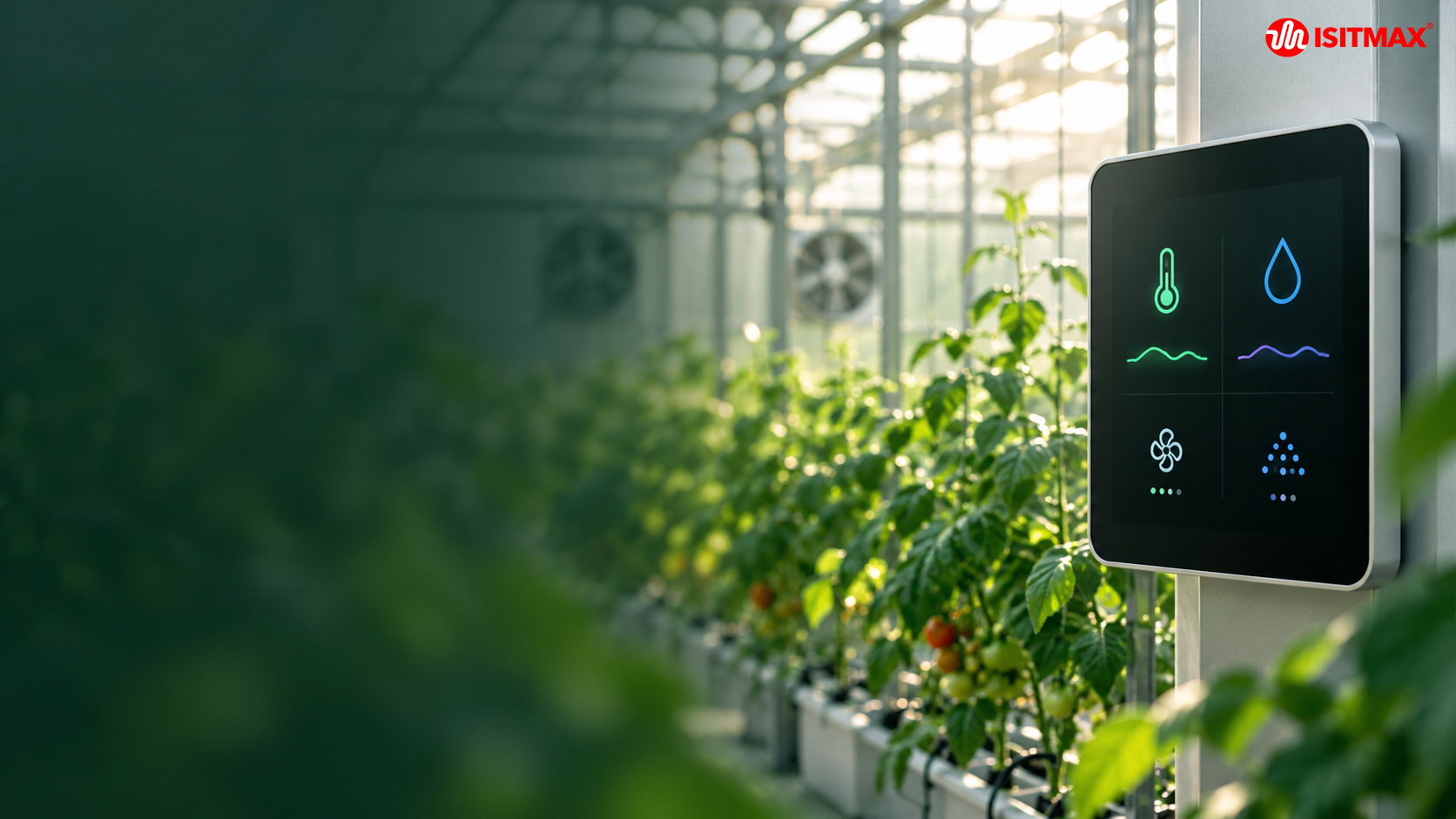
Greenhouse Climate Control System
Keep your greenhouse at the conditions you want, day and night, with a climate control system that manages temperature, humidity, ventilation, screens, fogging and CO2 automatically based on sensor data.
- 1–8greenhouses per unit
- 8 + 8sensor inputs
- 16control outputs
- Remotemonitoring and control
A stable greenhouse climate means stable yields
Temperature and humidity inside a greenhouse can change within minutes. The sun suddenly coming out, a drop in night temperature or rising humidity can stress plants and lead to disease and crop losses before anyone can step in by hand.
A climate control system monitors these changes with sensors in real time and operates the right equipment automatically according to the values you set. Your greenhouse is managed correctly even when you are not there.
- A stable growing environment Temperature and humidity stay within the target range.
- Fewer crop losses Sudden climate changes are dealt with immediately.
- Higher yields Plants grow in the conditions they need.
- Recorded production All measurements are stored and can be reviewed in charts.
The 5 key parameters of the greenhouse climate
Plant productivity depends on managing these five values together and in balance. When one changes, the others are affected too, so climate control handles them all together rather than one value at a time.
Temperature
Directly determines the growth rate, flowering and fruit set. Separate day and night targets are needed; it is managed with heating, ventilation and cooling.
Relative humidity
High humidity encourages fungal diseases, while low humidity causes water stress. It is balanced by combining ventilation, fogging and heating.
Light (solar radiation)
The energy source of photosynthesis. Shading screens close under excessive radiation; grow lights can be used when light is insufficient.
Carbon dioxide (CO2)
The raw material of photosynthesis. When the greenhouse is closed with little ventilation, CO2 can drop; it is measured and supplied when needed.
Air movement
Spreads temperature and humidity evenly through the greenhouse and reduces moisture on leaf surfaces. It is managed with circulation fans.
It measures, compares and acts
The system consists of a control unit inside the greenhouse and a weather station outside. The cycle below repeats continuously throughout the day.
- 01
Measures
Inside sensors and the weather station measure temperature, humidity, radiation, wind, rain and CO2 in real time.
- 02
Compares
The control unit continuously compares the readings with the lower and upper limits you have entered for your crop.
- 03
Acts
When a limit is exceeded, it activates the relevant system (screens, roof vents, fans, fogging, heating…) and brings the climate back to the target range.
The right measurements for the right decisions
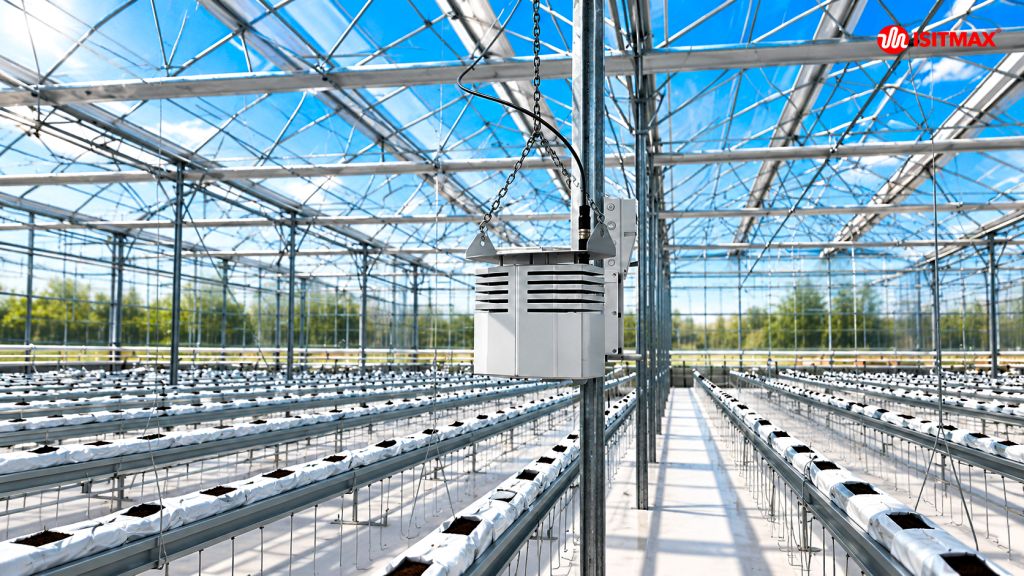
The success of climate control depends on choosing the right sensors and placing them in the right positions. Inside values come from sensors connected to the control unit; outdoor data comes from sensors on the weather station.
- Temperature Inside and outside
- Relative humidity Inside and outside
- Solar radiation Sunlight intensity
- Wind Speed and direction
- Rain Rain detection
- Carbon dioxide CO2 level
- Heating water Water temperature
All the climate equipment in your greenhouse, from one centre
Temperature, humidity, light and ventilation all affect each other. That is why all the equipment is managed together by one system rather than separately.
Roof ventilation
Roof vents open and close in stages according to inside temperature and humidity, taking wind and rain data into account.
Screens
Shading and energy screens are controlled by solar radiation and time of day, reducing overheating by day and heat loss at night.
Fans
Circulation and exhaust fans keep the air evenly distributed and the temperature balanced throughout the greenhouse.
Fogging
When humidity drops or temperature rises, fogging switches on to humidify and cool.
Heating
The heating system runs to the day and night temperature set points you define, and the heating water temperature is monitored.
Cooling
In hot periods, cooling systems run automatically to keep the inside temperature within the target range.
CO2 dosing
The carbon dioxide level is measured and CO2 is supplied when needed to support photosynthesis.
Grow lights
Lighting switches on and off automatically according to light requirements and the programme.
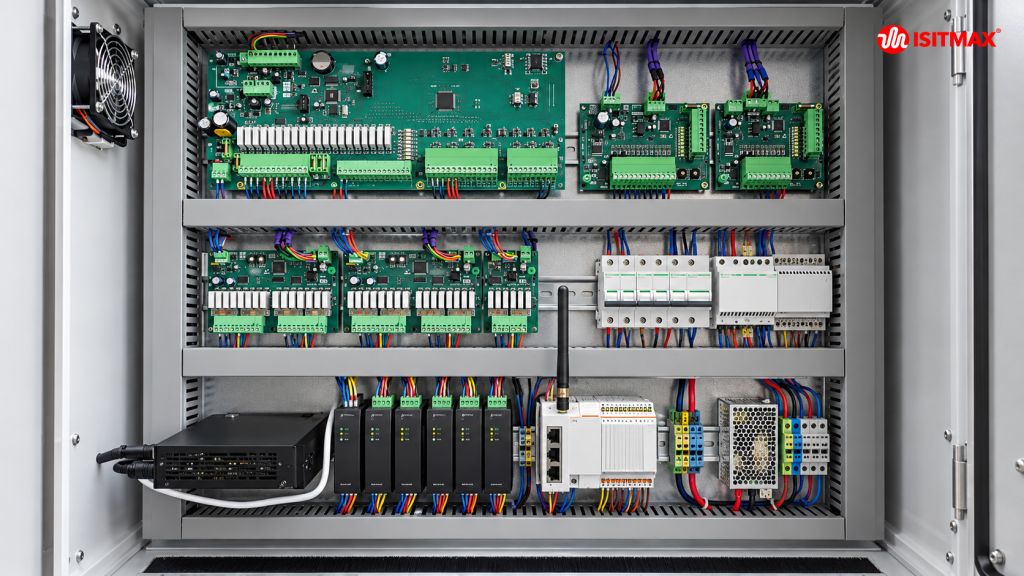
Managed from one place: the control panel
The motor and pump connections of the screens, vents, fans, fogging and heating equipment come together in one panel. The control unit operates this equipment together based on the readings from the sensors.
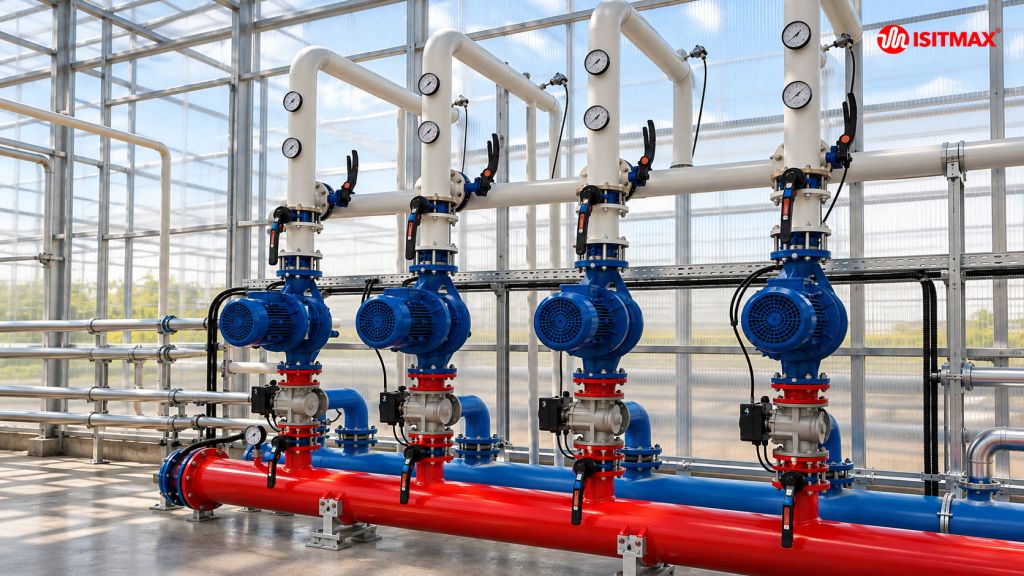
Works together with the heating installation
When the heating system is connected to climate control, the inside temperature is managed to the day and night targets; the heating water temperature is monitored and heat loss is reduced together with the energy screen.
What does the system do in summer, winter and the seasons in between?
Each season brings different challenges. The climate control system runs the same equipment with different scenarios depending on the season and the outdoor conditions.
Summer
- Shading screens cut excessive radiation
- Strong ventilation through roof and side vents
- Cooling with fans and fogging
- Fogging compensates for falling humidity
Winter
- Energy screens reduce heat loss at night
- Heating follows the day and night set points
- Short, controlled ventilation to lower humidity
- Vents are protected in rain and wind
Spring and autumn
- Managing the day–night temperature difference
- Fast ventilation when the sun suddenly comes out
- Humidity control against morning condensation
- Heating and ventilation balanced together
Manual climate management or a climate control system?
It is possible to manage vents, screens and heating by hand, but the greenhouse climate changes many times a day and keeping up with every change in time becomes difficult.
| Topic | Manual management | Climate control system |
|---|---|---|
| Response time | Time passes until staff notice and act | Automatic action as soon as a limit is exceeded |
| Nights and weekends | Monitoring is harder; sudden changes can be missed | The system runs 24 hours a day with the same precision |
| Equipment coordination | Vents, screens, fans and heating are handled separately | All equipment is managed together from one centre |
| Outdoor weather data | Decisions are based on the weather forecast | Real-time measurements from the weather station |
| Records and analysis | No climate history is kept | All measurements are recorded and can be reviewed in charts |
| Remote management | You have to go to the greenhouse | Remote control over the internet |
Which greenhouses is it used in?
The climate control system is configured around the ventilation, screen, fan, fogging and heating equipment in your greenhouse. The control scenario is prepared for your crop and the structure of your greenhouse.
- Glass greenhouses
- Polycarbonate greenhouses
- Plastic-covered greenhouses
- Soilless (hydroponic) production
- Soil-based production
- Seedling and flower greenhouses
Dağdelen climate control system
Agroteknik is an authorized dealer of Dağdelen greenhouse automation systems. The system capacity is planned in the project according to the number of greenhouses and the equipment to be controlled.
Request a quote for your project| Control capacity | 1 to 8 greenhouses with a single unit |
|---|---|
| System layout | Indoor control unit + weather station |
| Sensor inputs | 8 standard and 8 digital inputs (optionally expandable) |
| Control outputs | 16 outputs (optionally expandable) |
| Data logging | All data recorded via a computer connection, with monitoring and adjustment through charts |
| Remote access | Remote control of all functions over the internet |
| Measured values | Inside/outside temperature and humidity, solar radiation, wind speed and direction, rain, CO2, heating water temperature |
| Controlled systems | Screens, roof vents, fans, fogging, heating, cooling, CO2, grow lights |
Values are manufacturer data.
Your greenhouse under your control, wherever you are
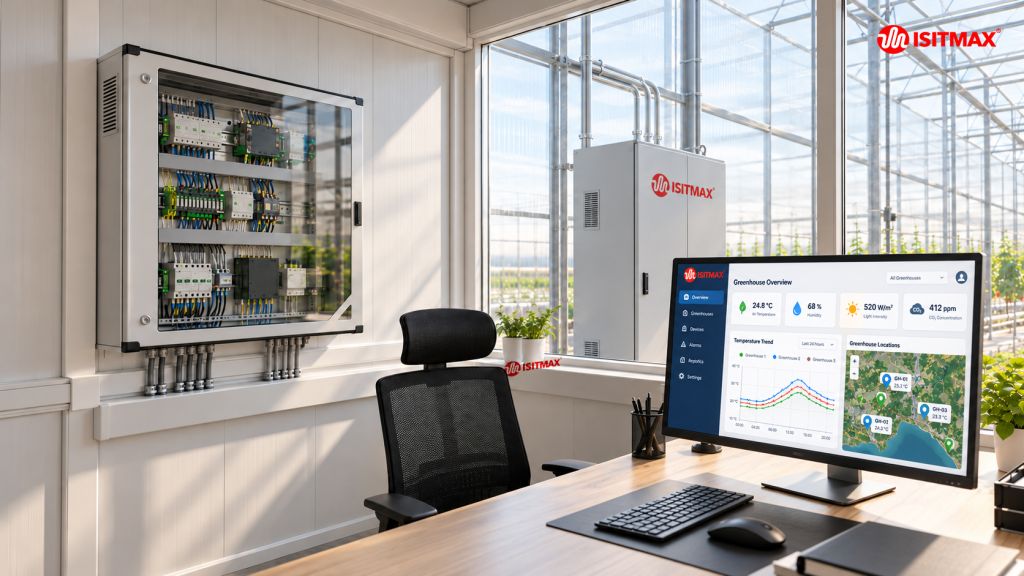
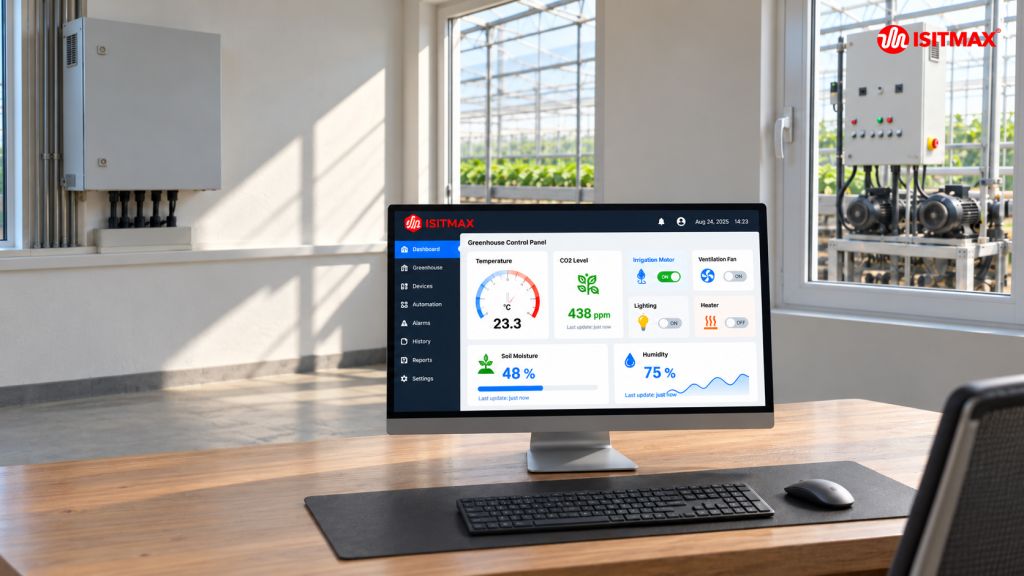
The climate control system can be monitored and controlled remotely over the internet. With a computer connection, all measurements are recorded; you can review past data in charts and change set points remotely.
- Live temperature, humidity and equipment status
- Past climate data in charts
- Remote changes to set points
- Recorded, measurable production
6 points for getting climate control right
The success of a climate control system depends as much on sensor positions, equipment compatibility and correct set points as on the device itself.
Place the sensors correctly
Inside sensors should be at plant level, out of direct sunlight and at representative points in the greenhouse.
Install the weather station in the open
For accurate outdoor readings, the station should be away from the shade of buildings, trees or the greenhouse, where the wind is not blocked.
Make sure the equipment is automation-ready
Screen and vent motors, fans and valves must be selected and connected to work with the control unit.
Set the values for the crop
Temperature and humidity limits should be based on the crop and its growth stage, and updated during the season.
Protect the electrical installation
The control panel, cabling and protective devices must suit the humidity and temperature of the greenhouse.
Maintain and check regularly
Cleaning and calibrating sensors and checking motors keep the system working correctly for many years.
One team, from site visit to service
We don’t just sell the climate control system: we plan it for your greenhouse, install it with our own team and support you after the sale.
- 01
Site visit and needs analysis
We look at the size of your greenhouse, your crop and the equipment to be controlled.
- 02
System planning
Sensor positions, the input/output list and automation scenarios are prepared for your project.
- 03
Installation
The unit, weather station, sensors and connections are installed by our own team.
- 04
Commissioning and training
Set points are entered for your crop, and your team is shown how to use the system.
- 05
After-sales service
Support and service keep the system running smoothly for many years.
Think of your greenhouse as a whole
Frequently asked questions about greenhouse climate control
If your question is not answered here, call us and we will answer it for your project.
What does a greenhouse climate control system control?
The system automatically manages roof vents, shade and energy screens, fans, the fogging system, heating and cooling, CO2 dosing and grow lighting according to the values you set.
How many greenhouses can one climate controller manage?
According to the manufacturer, the Dağdelen climate control unit we use can control between 1 and 8 greenhouses with a single unit. For larger facilities, several units are planned according to the needs of the project.
Can I monitor and control my greenhouse remotely?
Yes. The system can be monitored and operated remotely over an internet connection. With a computer connection, all measurements are recorded, can be reviewed on graphs, and settings can be adjusted.
Which sensors are used?
Inside and outside temperature and humidity, solar radiation, wind speed and direction, rain, carbon dioxide (CO2) and heating water temperature are measured. Outside measurements come from the weather station.
How is greenhouse temperature controlled automatically?
The system continuously measures the inside temperature with sensors and compares it with the day and night targets you enter. When the temperature falls, it switches on the heating or closes the energy screen; when it rises, it opens the vents, draws the shade screen and starts cooling systems such as fans and fogging.
Why is humidity control important in a greenhouse?
High humidity leads to condensation on leaves and creates conditions for fungal diseases; low humidity causes water stress in the plant. The climate control system keeps humidity in balance by using ventilation, fogging and heating together.
What is the weather station for?
It measures the temperature, humidity, wind speed and direction, rain and solar radiation outside the greenhouse. With this data the system can, for example, protect the vents in wind and rain and start shading in advance when the sun gets stronger.
Who installs and services the system?
As an authorized Dağdelen dealer, Agroteknik installs and commissions the system with its own team and provides user training. After-sales support and service are provided.
What does the price of a climate control system depend on?
The price depends on the number and area of greenhouses, the amount of equipment to be controlled (screens, fans, fogging, heating, etc.), the sensors used and the installation conditions. A project-specific quote is prepared after the site assessment.
Get a climate control quote for your greenhouse
Tell us how many greenhouses you have, their area and the equipment you want to control, and our team will contact you for a site assessment and quote.