
Greenhouse Engineering, Automation and Smart Agriculture Technologies
Agroteknik brings greenhouse construction, heating, climate control, irrigation, automation, IoT and data technologies together within an integrated engineering approach. In addition to new greenhouse investments, individual technical systems can also be designed independently for existing facilities.
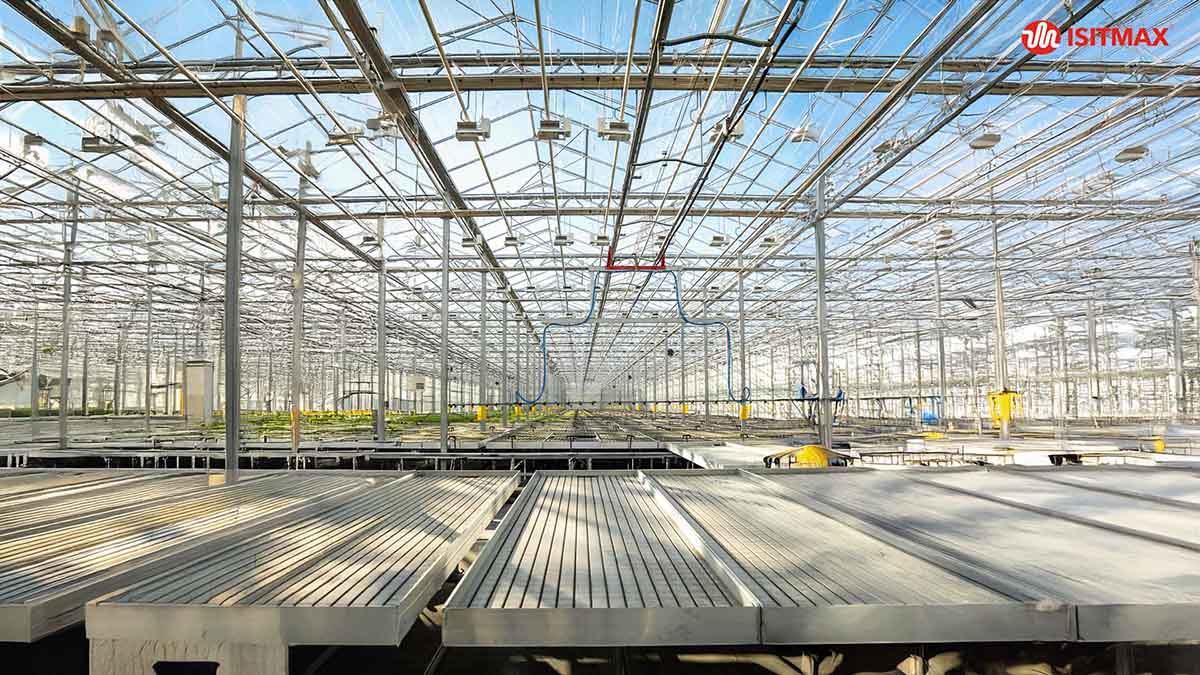
Engineering the Technical Systems Behind Modern Greenhouses
A modern greenhouse is more than a steel structure. Structural systems, heating, climate control, irrigation, sensors, automation and data infrastructure interact with one another. Agroteknik can design these systems together or independently according to project requirements.
Professional greenhouse engineering begins by evaluating the target crop, production capacity, project location, regional climate conditions and operational objectives.
Greenhouse dimensions, structural systems, covering, ventilation, heating, irrigation, electrical infrastructure and automation should be designed as parts of the same production system rather than as unrelated decisions.
For a detailed overview of the project stages, see our greenhouse construction process guide.
The greenhouse structure supports the covering, mechanical infrastructure and production equipment. Structural design should consider wind and snow loads, greenhouse geometry and equipment requirements rather than greenhouse area alone.
Depending on project requirements, ISITMAX weldless greenhouse construction can be used to develop modular, engineering-based greenhouse structures.
Future heating pipes, screen systems, lighting, automation equipment and crop loads should also be considered during structural planning.
Greenhouse temperature and humidity change according to outdoor weather, solar radiation, ventilation, crop activity and heating-system operation.
Agroteknik projects can evaluate heating demand, heat distribution, ventilation and environmental control together according to the selected production model.
For more technical information, see our greenhouse heating system design and greenhouse climate control automation guides.
Where required, root-zone heating systems can also be integrated into the greenhouse climate strategy.
Irrigation systems should be designed according to crop requirements, production area, water quality and daily water demand.
Large greenhouse facilities can be divided into independent irrigation zones. Automated systems can integrate pumps, valves, flow meters, EC and pH sensors and nutrient-dosing equipment with a central controller.
For detailed information, see our greenhouse fertigation automation guide.
Temperature, humidity, CO₂, irrigation, energy use and equipment status can be measured through sensors and monitored through centralized automation systems.
Controllers and IoT gateways can transfer field data to local or cloud-based software platforms. This makes it possible to monitor not only current measurements, but also historical data and alarm records.
Learn more about the system architecture in our greenhouse automation guide and our greenhouse IoT data storage and cloud infrastructure article.
In smart greenhouse systems, field data can be used not only for automatic control but also for performance analysis and decision support.
Historical temperature, humidity, irrigation, energy and equipment data can be used to compare production periods and identify recurring operational patterns.
A consistent data infrastructure can also provide the foundation for more advanced artificial intelligence and machine-learning applications.
New greenhouse investments may require structure, heating, climate control, irrigation, automation and technical infrastructure to be coordinated within one project.
For these projects, Agroteknik provides turnkey greenhouse systems where project requirements can be evaluated as an integrated engineering scope.
The dedicated turnkey greenhouse page provides detailed information for investors planning a complete greenhouse project, including engineering, system integration and project scope.
Building a New Greenhouse or Upgrading an Existing Facility?
From complete greenhouse projects to individual construction, heating, irrigation, automation or IoT systems, share your technical requirements with Agroteknik and we can evaluate the appropriate project scope.
Greenhouse Technologies for Different Crops and Production Systems
Different production models do not require the same greenhouse structure or technical equipment. Crop type, production method, regional climate, energy requirements and level of automation all influence project design. Agroteknik evaluates the structural and technological requirements of each commercial production model individually.
In commercial greenhouses producing tomatoes, peppers, cucumbers and similar crops, temperature, humidity, irrigation, ventilation and energy management are important for production performance.
Greenhouse structure, heating, irrigation, climate control and automation can be designed together according to crop requirements and regional climate conditions.
Flower and ornamental plant production may require precise management of temperature, humidity, light, irrigation and ventilation.
Greenhouse structure, climate systems, production layout and automation can be planned according to the specific plant varieties being grown.
During early plant-development stages, stable temperature, humidity and irrigation conditions can be particularly important.
Heating, irrigation, climate control and production layouts can be designed according to nursery and seedling requirements.
Research and controlled-environment greenhouses may require environmental conditions to be measured and reproduced consistently.
Sensors, automation systems, data logging and agricultural data analytics can be integrated into the project infrastructure.
Vertical farming projects require rack geometry, growing-level spacing, LED lighting, hydroponic irrigation, airflow and automation to be considered as parts of one production system.
In multi-level growing facilities, vertical farming rack design directly influences capacity, lighting, access and operating efficiency.
Garden centers can require production, display, customer circulation and sales areas to be considered together within a functional greenhouse or covered-space design.
Large greenhouse investments may also require storage, technical rooms, fertigation areas and other auxiliary spaces to support production and daily operations.
In large commercial greenhouse facilities, corridors, working areas and internal logistics should be planned to support efficient movement of crops, personnel and equipment.
Agrivoltaic greenhouse projects combine agricultural production and solar-energy generation within the same site.
Structural design, photovoltaic-panel placement, shading effects, crop requirements and energy objectives should be evaluated together.
Plan the Technical Infrastructure of Your Greenhouse Project
Whether you are planning a new facility, modernizing an existing greenhouse or need only construction, heating, irrigation, automation or IoT systems, share your requirements with us and we can evaluate the appropriate technical scope.